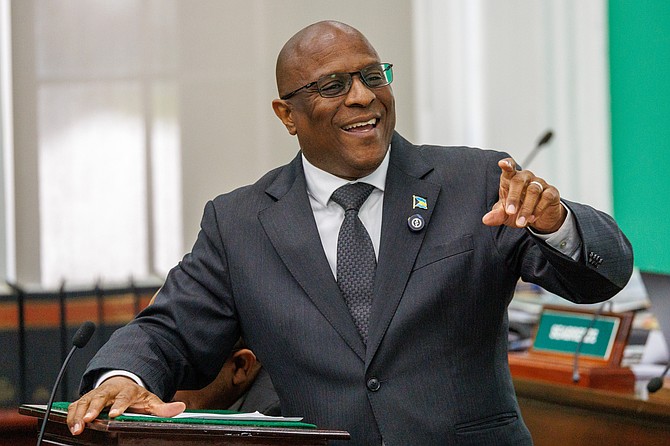
The Bahamian Parliament witnessed a renewed confrontation between Prime Minister Philip Davis and Opposition Leader Michael Pintard during debates on cultural legislation, reviving their contentious dispute about the definition of legitimate employment. The political adversaries clashed while discussing two significant bills: the Creative and Performing Arts School (CAPAS) Bill, 2026 and the Junkanoo Authority Bill, 2026.
Opposition Leader Pintard accused the Prime Minister of disparaging creative professionals, asserting that artistic pursuits constitute genuine employment. “I want you to know that being a playwright is a job,” declared Mr. Pintard. “Writing poetry is a job. Performing in theater or public spaces is a job. All these activities you’ve denigrated are, in fact, legitimate occupations.”
Prime Minister Davis countered these allegations, emphasizing his administration’s demonstrated support for the arts through initiatives like CAPAS and financial assistance to the Dundas Theatre. He refuted claims that he had ever devalued artistic professions or suggested creatives were unqualified for high office. The Prime Minister redirected criticism toward Mr. Pintard’s professional background, highlighting his own distinguished legal career and regional contributions to legal education.
The debate intensified when National Security Minister Wayne Munroe intervened, questioning the Opposition Leader’s self-identification on his party’s website. Minister Munroe noted the discrepancy between Mr. Pintard’s current defense of creative professions and his official characterization as a human resources consultant rather than a poet or writer.
Amidst the political sparring, Parliament considered substantial cultural legislation. The CAPAS Bill proposes establishing a statutory body governed by a board and president to oversee artistic training, research, and creative production. Education Minister Glenys Hanna-Martin described the legislation as investing in “permanence, professionalism and prosperity” for Bahamian talent, preventing the institution from suffering the fate of the defunct National Dance School.
The parallel Junkanoo Authority Bill aims to create a regulatory body for national parades, manage funding, establish commercial subsidiaries, and expand the cultural festival beyond seasonal limitations. Youth, Sports and Culture Minister Mario Bowleg characterized the legislation as “deliberate and forward-looking,” designed to benefit national culture beyond temporary political considerations.
While supporting the expansion of Junkanoo beyond seasonal festivals, Opposition Leader Pintard expressed concerns about excessive governmental control over cultural decisions. Prime Minister Davis acknowledged that both initiatives had been discussed across multiple administrations but emphasized his government’s commitment to achieving tangible progress where previous efforts had stalled.