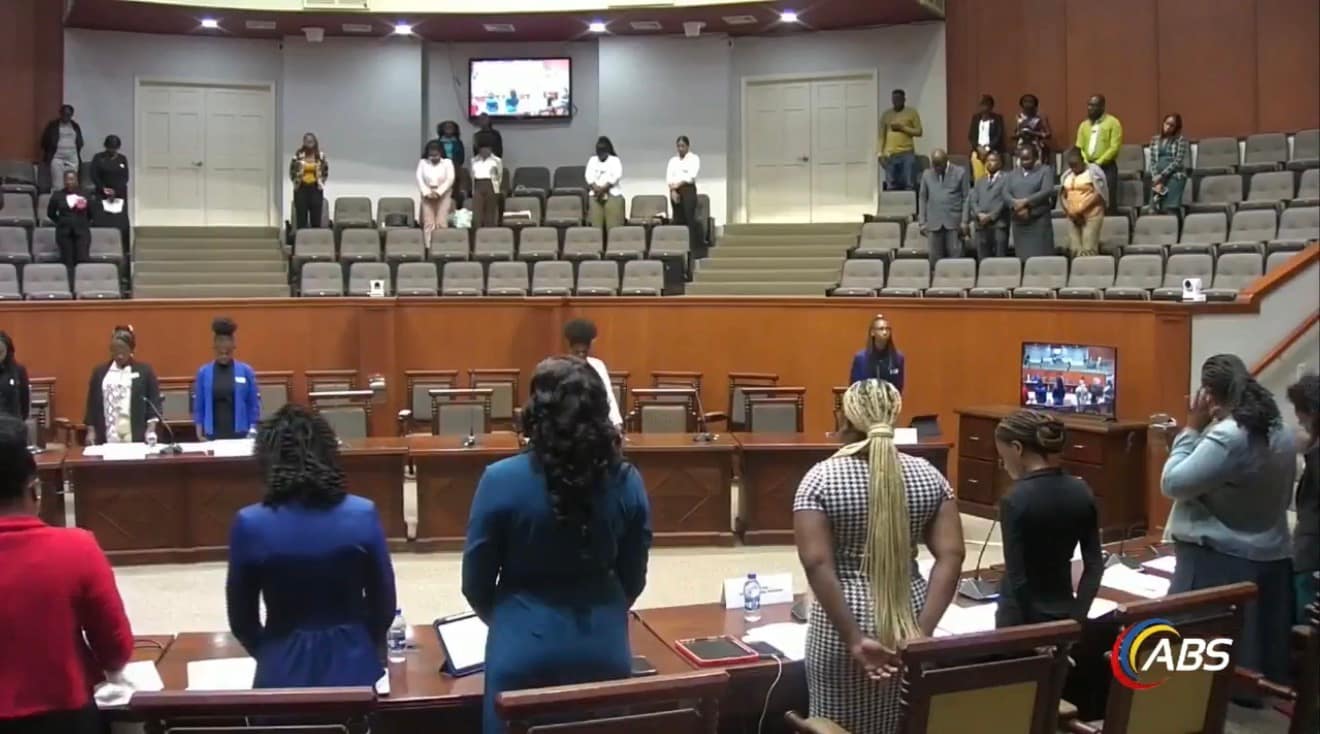
In a dynamic demonstration of civic engagement, participants of Antigua and Barbuda’s Young Women in Leadership programme convened a mock parliamentary session to debate cannabis legislation reform during International Women’s Day observances. The special sitting featured a comprehensive examination of a proposed motion to establish a Joint Select Committee tasked with reviewing existing cannabis laws through both human rights and gender-responsive perspectives.
The parliamentary simulation focused on the Cannabis Act 2022 and related drug amendments, with proponents arguing that periodic legislative reviews are essential for maintaining relevance in an evolving society. One delegate emphasized that “a responsible government does not just pass reforms, it safeguards and ensures that its citizens are taken care of,” advocating for integrated educational campaigns within any revised cannabis policy framework.
Advocates maintained that a specialized committee would enable thorough consultation with experts and community stakeholders while assessing the socioeconomic and public health implications of recent cannabis reforms. Supporters further contended that structured evaluation could identify deficiencies in public education, law enforcement protocols, and regulatory mechanisms while simultaneously fostering youth protection and economic inclusion within the emerging cannabis sector.
The opposition voiced skepticism regarding the necessity of establishing new parliamentary structures, noting that significant legislative reforms had already been implemented in recent years. One participant cautioned that premature revisiting of the legal framework could generate policy uncertainty, suggesting that society required additional time to adapt to existing changes.
Alternative proposals emerged suggesting that current government institutions already possess sufficient expertise to conduct legislative analysis without creating additional bureaucratic layers. Health concerns featured prominently in the discourse, with references to regional data indicating substantial marijuana usage among student populations and calls for science-based decision-making in future policy considerations.
Despite divergent perspectives, the deliberation underscored the multifaceted nature of cannabis policy, intersecting with criminal justice, economic development, public health, and human rights considerations. Program organizers designed the exercise to provide practical experience in parliamentary procedures while stimulating informed dialogue on national policy matters. The leadership initiative aims to cultivate future female leaders by enhancing capabilities in public address, legislative debate, and governance principles.