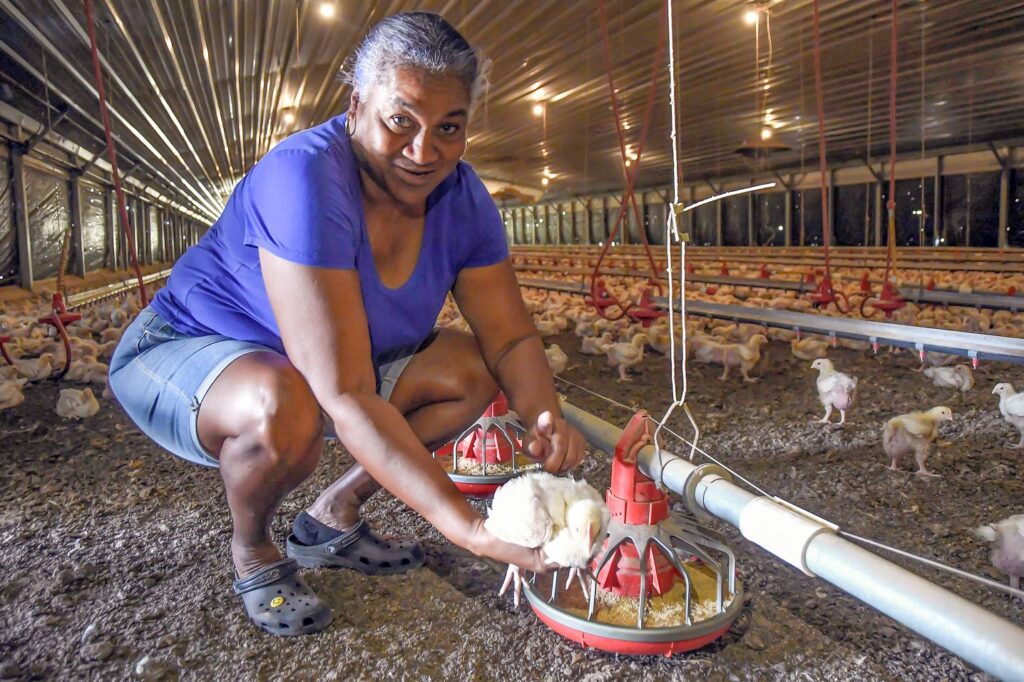
Jamaica’s poultry producers are mounting pressure on the government to terminate emergency import concessions on chicken and eggs, asserting that these measures have surpassed their original purpose and now threaten to undermine local agricultural recovery efforts following Hurricane Melissa.
The temporary waivers, which suspended duties and General Consumption Tax on specific food imports to address post-hurricane shortages, were initially scheduled to conclude in February. Agriculture officials have recently suggested a potential extension through May as a precautionary measure.
Industry data reveals a remarkable production rebound, with weekly chicken output projected to reach 3-3.1 million kilograms by late March—significantly exceeding last year’s 2.7 million kilograms during the same period and surpassing typical supply levels.
Dave Fairman, Vice-President of Jamaica Broilers Group’s Best Dressed Chicken Division, confirmed to media outlets: “We feel fairly confident that current supplies exceed normal annual availability levels.”
While producers acknowledge the initial necessity of emergency measures to stabilize food supplies after widespread damage to farms and livestock operations across multiple parishes, they contend that extending import concessions would disadvantage local farmers who have invested substantially in rebuilding operations. These recovery efforts have been supported by government agencies, private sector initiatives, and aid organizations.
Jaimie Ogilvie, Vice-President of Jamaica Broilers Group’s Hi-Pro Division, emphasized the broader implications: “This extends beyond poultry products to encompass the entire agricultural sector. Farmers are expressing concerns about onions, tomatoes, and vegetables. Our import policy must strike a balance—we cannot allow imported products to compete with local production while attempting to resuscitate domestic agriculture.”
The hurricane disproportionately affected small-scale farmers, who contribute approximately 30-35% of Jamaica’s chicken supply. Many operations in western parishes—including St Elizabeth, Westmoreland, Hanover, St James, and Trelawny—suffered catastrophic losses of infrastructure and livestock.
Industry recovery has been accelerated through coordinated support programs that provided construction materials, increased chick distributions, and technical assistance. Jamaica Broilers alone supplied 17% more baby chicks to small farmers in January and 15% more in February compared to typical levels, while government agencies distributed approximately 80,000 chicks.
Current market challenges primarily reflect distribution imbalances rather than actual shortages, according to industry representatives. While some western regions continue experiencing reduced demand due to ongoing hotel and business recovery, other areas have developed surplus supplies. The Rural Agricultural Development Authority has been facilitating regional distribution networks to address these disparities.
The egg market faces similar complications, with temporary import approvals leading to market oversupply. Hurricane Melissa resulted in the loss of approximately 400,000 laying hens, prompting limited import permissions to prevent shortages. However, imported eggs—particularly medium-sized products from the United States—are now entering the market below local production costs, creating temporary gluts that disadvantage Jamaican egg farmers.