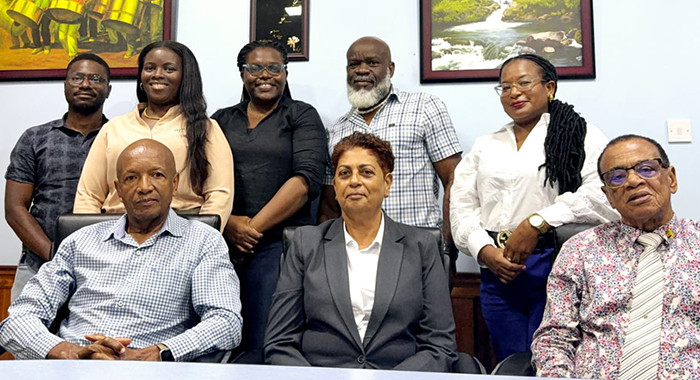
In a landmark moment for institutional governance, the newly constituted board of the National Lotteries Authority (NLA) held its inaugural meeting on Thursday under the historic chairmanship of Luann Hadaway. This appointment marks the first time a woman has led the board since the authority’s establishment four decades ago in 1984.
Chairperson Hadaway, leveraging nearly forty years of expertise in banking and finance, articulated a powerful vision centered on restoring public trust and institutional integrity. She emphasized the profound responsibility bestowed upon the board to safeguard what she described as a vital public trust belonging collectively to the nation’s citizens, rather than any individual or political entity.
The composition of the new board reflects a deliberate emphasis on diverse professional competencies. Deputy Chair Bryan Alexander brings multifaceted experience as an entrepreneur, accountant, and musician. They are joined by Olson James (ACCA Certified Accountant specializing in financial reporting and auditing), Teressia Bruce (human resources and general management), Delisia Charles-Defreitas (business and project management), Sheena Child (administrative professional specializing in project coordination), and Esteban Hernandez (accounting and finance).
In her address, Hadaway acknowledged the contributions of former manager McGregory Sealey and the outgoing board while drawing a clear line under past practices. Without explicit accusation, she implicitly addressed historical concerns by stating the board would ensure management operates within “a strong framework of controls and ethical standards.” This appears responsive to previous allegations that the NLA had been utilized as a discretionary fund by the former Unity Labour Party government, which left office in November 2025.
The chairperson outlined a comprehensive governance framework built on four pillars: stringent financial oversight, responsible gaming practices, transparent communication, and absolute confidentiality regarding board deliberations. She notably framed the NLA’s mission as extending beyond mere revenue generation, defining success through “how responsibly those revenues are managed and how meaningfully they benefit national development.
The authority, operating under the Ministry of Finance, will continue its mandated support for sports and culture (approximately 80% of allocations) while maintaining its expanded role in education, healthcare, and community development (approximately 20%). Hadaway concluded by emphasizing that robust foundations in governance would ensure the institution’s longevity and public confidence, noting that “public confidence is fragile—earned slowly and lost quickly.”