ACCRA, GHANA – March 6, 2026 marked a significant moment in Afro-Caribbean relations as Saint Kitts and Nevis Prime Minister Honourable Dr. Terrance Drew received special recognition during Ghana’s 69th Independence Anniversary celebrations. The event, held at the historic Jubilee House in Accra, served as the culminating engagement of Dr. Drew’s official state visit to the West African nation.
The national ceremony assembled government dignitaries, diplomatic corps representatives, military officials, students, and citizens to commemorate Ghana’s liberation from colonial rule in 1957. Prime Minister Drew and his wife Diani Prince-Drew joined Ghanaian President His Excellency John Dramani Mahama and Vice President H.E. Professor Jane Naana Opoku-Agyemang for the ceremonial parade and official programming.
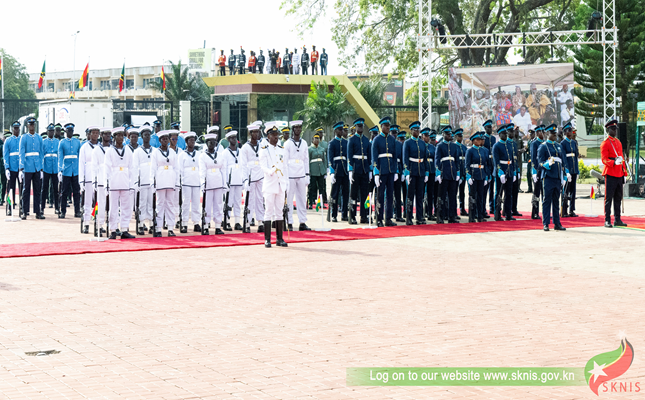
The celebration featured vibrant cultural displays including interfaith prayers from traditional, Muslim, and Christian leaders, alongside musical performances, poetry recitations, and cultural presentations by school children. The official proceedings included a military parade inspection and the lighting of the perpetual flame preceding President Mahama’s national address.
A particularly symbolic moment occurred as the national flag of Saint Kitts and Nevis flew prominently at Jubilee House—the very grounds where Ghana first celebrated its independence. Prime Minister Drew characterized the experience as profoundly meaningful for both nations, emphasizing the enduring historical connections between the Caribbean and Africa.
“Witnessing Ghana’s 69th independence celebration carries deep personal and symbolic significance,” stated Dr. Drew. “Our presence here reinforces that the Caribbean narrative remains incomplete without acknowledging African roots. The resilience, culture, and spirit of our ancestors crossed the Atlantic and continue thriving within our people.”
The prime minister’s participation concluded a series of bilateral engagements aimed at strengthening cooperation in education, diplomacy, and cultural exchange. Both governments reaffirmed their commitment to enhancing ties rooted in shared heritage and mutual respect, signaling a new chapter in South-South cooperation and diasporic reconnection.