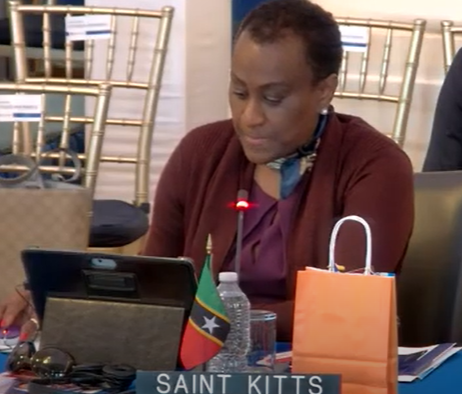
WASHINGTON, DC – In a significant address to the Organization of American States (OAS) Permanent Council, St. Kitts and Nevis Ambassador Jacinth Henry-Martin articulated the pressing challenges surrounding rare disease management across Caribbean communities. Representing both her nation and CARICOM member states during the Rare Disease Day observance, the ambassador highlighted the critical need for strengthened surveillance mechanisms and healthcare infrastructure to address these complex medical conditions effectively.
Ambassador Henry-Martin underscored the paradoxical nature of rare diseases in small island developing states. While documented cases remain numerically limited due to population size, this apparent scarcity often masks underlying issues of under-diagnosis, limited specialist access, and medical tourism among citizens seeking overseas treatment options. The ambassador emphasized that rare diseases collectively present substantial challenges for patients, families, and healthcare systems despite affecting relatively small numbers individually.
The Federation’s approach centers on building resilient and equitable health systems capable of addressing diverse medical needs. St. Kitts and Nevis has strategically leveraged its existing framework for non-communicable disease (NCD) management, implementing national policies including the 2013-2017 National Policy and Action Plan for NCD Prevention and Control, followed by a comprehensive Multi-sectoral Plan of Action. While not specifically designed for rare diseases, these initiatives provide foundational support for individuals with complex medical conditions.
Significant structural advancements are underway through collaboration with the Pan American Health Organization (PAHO) and regional academic institutions to develop a national health insurance scheme. This program aims to guarantee universal access to essential healthcare services while alleviating financial burdens associated with long-term treatments. Complementary social protection programs administered through the National Social Security Fund provide disability, maternity, child, and survivor benefits to households affected by illness.
Given the existence of over 6,000 identified rare diseases and the inherent limitations of small states in providing specialized diagnostics and therapies, Ambassador Henry-Martin stressed the indispensable role of regional and international cooperation. Partnerships through OAS, PAHO, and CARICOM facilitate critical resources including medical referrals, telemedicine services, pharmaceutical access, and health data sharing mechanisms.
The ambassador concluded by reaffirming the region’s commitment to dignity and human rights in healthcare, asserting that no individual should face disadvantage due to rarity or diagnostic complexity of their condition. CARICOM nations pledged continued dedication to building inclusive, resilient health and social systems that comprehensively serve all citizens, including those living with rare diseases.
In separate proceedings, St. Kitts and Nevis and CARICOM states acknowledged Chilean Permanent Representative Thomas Pascual’s service as Vice Chair of the Permanent Council, commending his leadership and contributions to inter-American cooperation as he concluded his tenure.