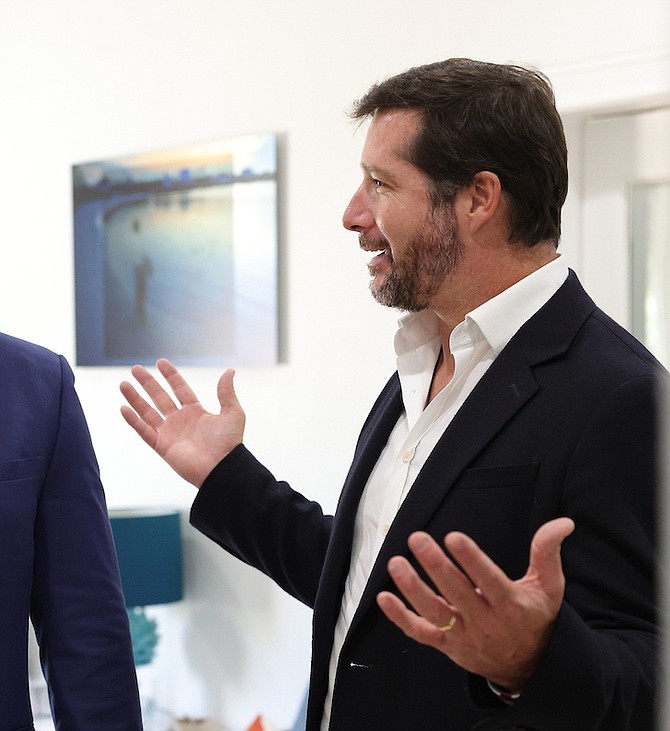
A longstanding administrative dispute between the Bahamian government and the Grand Bahama Port Authority (GBPA) has evolved into a deeply personal exchange regarding national identity and corporate governance. The conflict reached new intensity when GBPA Co-Chairman Rupert Hayward published an open letter to Prime Minister Philip Davis defending his family’s Bahamian heritage after feeling mischaracterized in parliamentary comments.
Prime Minister Davis had previously characterized a recent arbitration ruling as a turning point in government-port relations, criticizing what he described as excessive private control over Freeport’s governance. His statement that “Freeport is not the private estate of any family” and that he “cannot live with an arrangement in which two families decide the fate of tens of thousands of Bahamians” prompted Hayward’s emotional response.
In his detailed rebuttal, Hayward presented documentary evidence of his multigenerational Bahamian roots, including his father’s pre-independence birth certificate and his own hospital birth records from Princess Margaret Hospital. He described how his daughter became distraught upon hearing the characterization of their family, emphasizing that his commitment to The Bahamas spans generations despite approaching elections potentially encouraging populist rhetoric.
While acknowledging natural disagreements in a democracy, Hayward stressed the shared objective of both entities: advancing the welfare of the Bahamian people. He advocated for essential cooperation between the government and GBPA, noting that both institutions would continue to coexist and must collaborate for Freeport’s development.
Prime Minister Davis responded by clarifying that nationality was never his central concern, but rather the Port Authority’s asserted position in Freeport’s governance structure. He detailed how the GBPA had allegedly claimed extraordinary authority exceeding elected government powers in areas including licensing, immigration, customs, and environmental regulation while resisting financial obligations to the public purse.
The arbitration proceedings, which rejected the government’s $357 million claim for 2018-2022 administrative costs, nonetheless established the Port’s ongoing payment obligations until 2054 and affirmed government authority in core areas where the Port had sought special protections. Davis framed the outcome as affirming Bahamian sovereignty over Freeport while acknowledging the historical context of the Hawksbill Creek Agreement that granted the Port unusual authority during Freeport’s development under industrialist Sir Jack Hayward, Rupert’s father.
The exchange highlights fundamental tensions between historic private development agreements and modern democratic governance in The Bahamas, with both parties asserting their commitment to Bahamian interests while disagreeing profoundly on how those interests are best served.