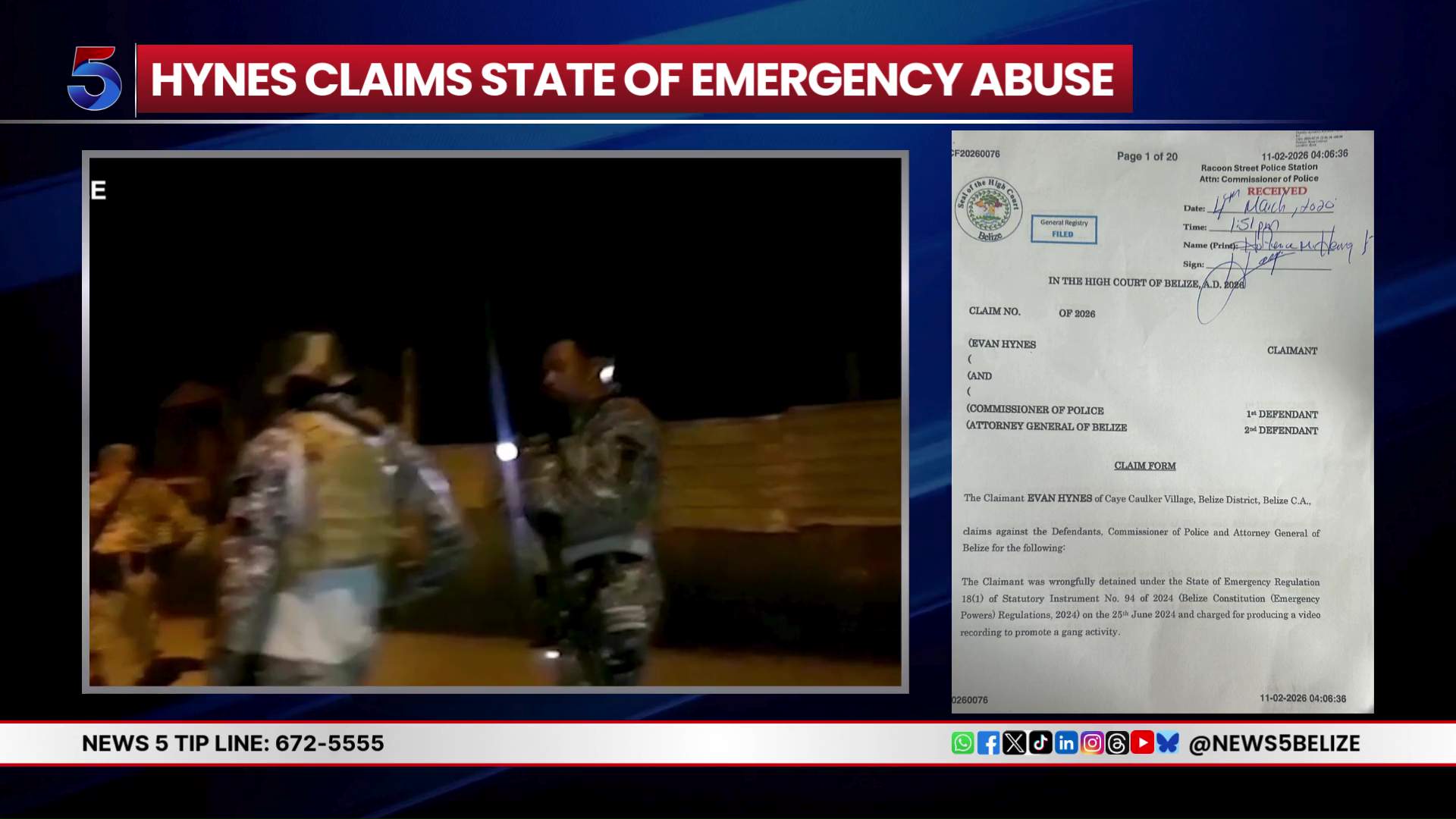
A legal battle has been initiated against Belizean authorities by Evan Hynes, a 29-year-old resident of Caye Caulker, who endured nearly four months of imprisonment under circumstances his legal team describes as fundamentally unlawful. The lawsuit names the Commissioner of Police and the Attorney General as defendants, centering on a detention that occurred during a State of Emergency declared for specific crime-prone zones—none of which included the island of Caye Caulker where Hynes resides.
The incident began on June 25, 2024, when Hynes was apprehended by police on allegations of producing a video that allegedly promoted gang activity. Critics note the alleged incident predated the official declaration of the State of Emergency by approximately two weeks. Following his arrest, Hynes was formally charged, systematically denied bail, and remanded to the Belize Central Prison.
He remained incarcerated for 91 days before legal intervention, spearheaded by his mother, prompted a review. In September 2024, an Emergency Powers Review Tribunal concluded that his detention was unjustified and recommended the immediate revocation of his detention order. Despite this recommendation, bureaucratic delays meant Hynes was not released until October 23, after finally being granted bail. The criminal case against him was ultimately dismissed on January 23, 2026.
Hynes is now seeking substantial damages for emotional distress and significant loss of income during his unlawful imprisonment. This case echoes a precedent from 2025, where the Belizean government was ordered to pay over $300,000 in compensation to sixteen individuals wrongfully detained under a similar State of Emergency in July 2020. That ruling found clear violations of fundamental rights and prompted a swift, though unsuccessful, legislative response. The government attempted to pass the Thirteenth Amendment Bill, which sought to constitutionally empower authorities to declare high-crime zones and, critically, to retroactively validate past states of emergency. The bill ultimately failed to pass into law.