In a landmark transaction reshaping the global energy landscape, a consortium of institutional investors led by BlackRock’s Global Infrastructure Partners has reached a definitive agreement to acquire Virginia-based AES Corporation. The equity valuation of $10.7 billion represents a substantial 40.3% premium over recent trading prices, with the total enterprise value reaching approximately $33.4 billion when accounting for outstanding debt.
The investor group, which includes Swedish private equity firm EQT alongside other major financial institutions, will pay $15 per share in a deal structured to conclude between late 2026 and early 2027, pending customary regulatory approvals. This acquisition occurs against the backdrop of surging electricity demand across the United States, particularly driven by the exponential growth of data centers requiring massive power resources.
AES brings substantial assets to the transaction, boasting a global generation portfolio of 32.1 gigawatts—with renewables constituting 64% of this capacity. The company reported $12.3 billion in revenue for 2024, demonstrating its robust market position. Corporate leadership indicated that transitioning to private ownership would provide enhanced financial flexibility to address capital requirements and accelerate expansion initiatives within power generation and utility operations.
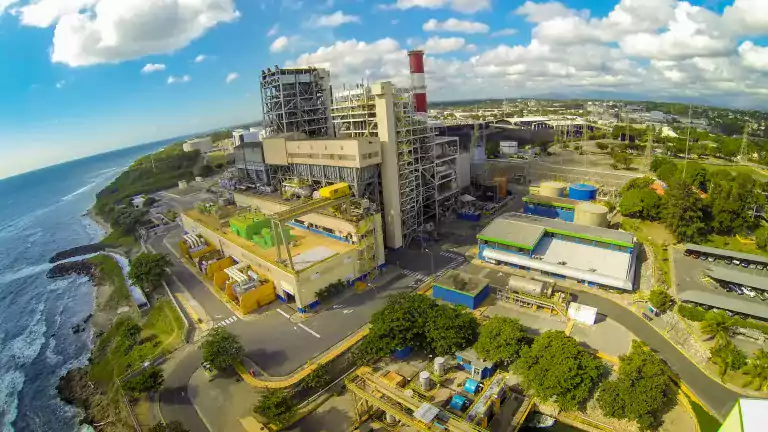
The transaction carries particular significance for the Dominican Republic, where AES maintains considerable presence through its local subsidiary AES Dominicana. The company operates critical energy infrastructure including the AES Andrés power plant—a cornerstone natural gas facility—and the strategically vital LNG terminal at Boca Chica. Additional involvement includes participation in the Eastern gas pipeline consortium and operations at Los Mina and Itabo power plants, the latter managed jointly with Dominican state entities.
AES Dominicana’s current portfolio encompasses 392.5 megawatts of solar generation, 52.5 megawatts of wind capacity, 11 megawatts of storage systems, and 319 megawatts of natural gas-fired generation. The company is further developing an additional 572 megawatts of renewable projects alongside a 138.1 megawatt battery energy storage system, positioning it as a pivotal contributor to the nation’s energy diversification objectives.
While immediate operational changes appear unlikely, the infusion of capital from financially substantial global investors may potentially influence future energy infrastructure development in the Dominican Republic. This occurs as the country experiences continued electricity demand growth and pursues aggressive renewable energy expansion as a national priority.