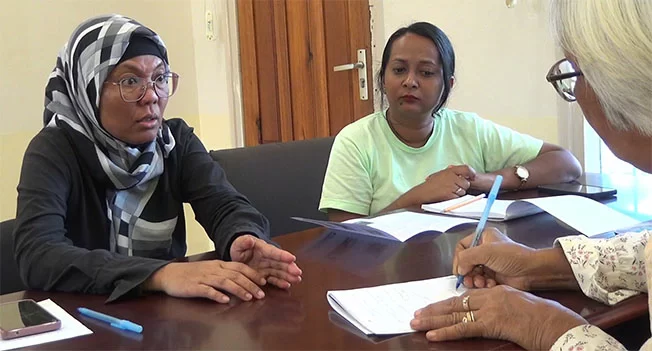
Surinamese agricultural authorities have issued an urgent alert regarding the escalating threat of Cassava Witches’ Broom Disease (CWBD), a devastating fungal infection that jeopardizes both food security and economic stability in remote communities. Antoinette Djoeneri, Head of the Mycology/Bacteriology Department at the Ministry of Agriculture, Livestock and Fisheries (LVV), emphasizes that this crisis demands coordinated national and regional response efforts.
The pathogen, which manifests through distinctive stunted growth and excessive branching in cassava plants, currently has no known effective fungicide treatment. Research initiatives across Brazil, French Guiana, and Colombia have similarly failed to develop chemical controls against this persistent fungus.
CWBD’s impact extends beyond agricultural damage to threaten the livelihoods of processing communities that depend on cassava for chip production and bread-making. The districts of Brokopondo, Marowijne and Sipaliwini face particular vulnerability due to their geographical isolation and reliance on cassava as a dietary staple.
Senior researcher Santusha Bhaggoe recommends immediate destruction of infected plants through controlled burning to prevent spore dissemination by insects. The practice of stacking contaminated plant material risks creating permanent infection reservoirs, as cuttings may resprout into diseased plants.
First identified in August 2025, the disease has prompted collaborative intervention between LVV, the Ministry of Regional Development, and research institution CELOS. Their multi-faceted approach includes:
– Distribution of educational materials and instructional videos
– Training technical staff to guide farmers through containment protocols
– Establishing reporting mechanisms through local agricultural offices
– Promoting crop diversification strategies to ensure food security
Authorities urge farmers to report suspected cases immediately to trained personnel who can provide guidance on containment measures and destruction techniques for infected crops.