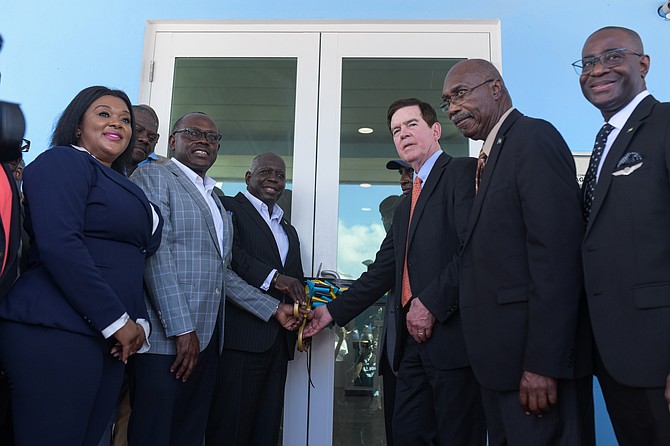
The Bahamian government has inaugurated a transformative $2.1 million airport terminal on Mayaguana Island, marking a significant milestone in its infrastructure modernization agenda. Prime Minister Philip Davis officially commissioned the facility during Saturday’s ceremony, declaring it would fundamentally reshape the island’s economic trajectory while ensuring the southern Bahamas receives equitable development attention.
The newly operational terminal at Abraham’s Bay Airport spans approximately 3,200 square feet and represents a substantial upgrade in passenger amenities. The climate-controlled facility features expanded ticketing services with seating for thirty travelers, dedicated airline offices, advanced baggage screening capabilities, public restrooms, commercial vendor spaces, and an integrated police station with detention facilities. The existing 6,700-foot runway accommodates mid-size jet aircraft, currently facilitating scheduled domestic flights between Mayaguana and Nassau.
This aviation infrastructure project serves as the initial component of a comprehensive development strategy that includes a planned three-phase deepwater seaport developed through public-private partnership. The envisioned maritime facility will incorporate specialized marine offloading infrastructure, cruise passenger terminals, and deepwater transshipment capabilities alongside adjacent land development initiatives.
Prime Minister Davis emphasized the project’s employment potential, projecting approximately 2,000 new jobs throughout the development lifecycle. “The economy of Mayaguana will be forever changed by this progress,” Davis stated. “This is just the beginning of our plans. The southern Bahamas is fully included in our plans and will not be neglected or forgotten.”
Deputy Prime Minister Chester Cooper, overseeing tourism, investments, and aviation, characterized the terminal as integral to the administration’s nationwide 14-airport enhancement strategy. He highlighted the facility’s role in improving connectivity while preserving the island’s distinctive environmental and cultural characteristics. Cooper envisions expanded cargo operations and emerging industries, particularly commercial fishing, with potential direct export routes to international markets including Brazil.
Construction commenced in December 2024 with completion achieved during third-quarter 2025. Full electrical integration was finalized in January 2026. Government officials position the development as a catalyst for accelerated economic expansion throughout the southern Bahamas, anticipating subsequent investments in hospitality, education, healthcare, and supporting infrastructure.