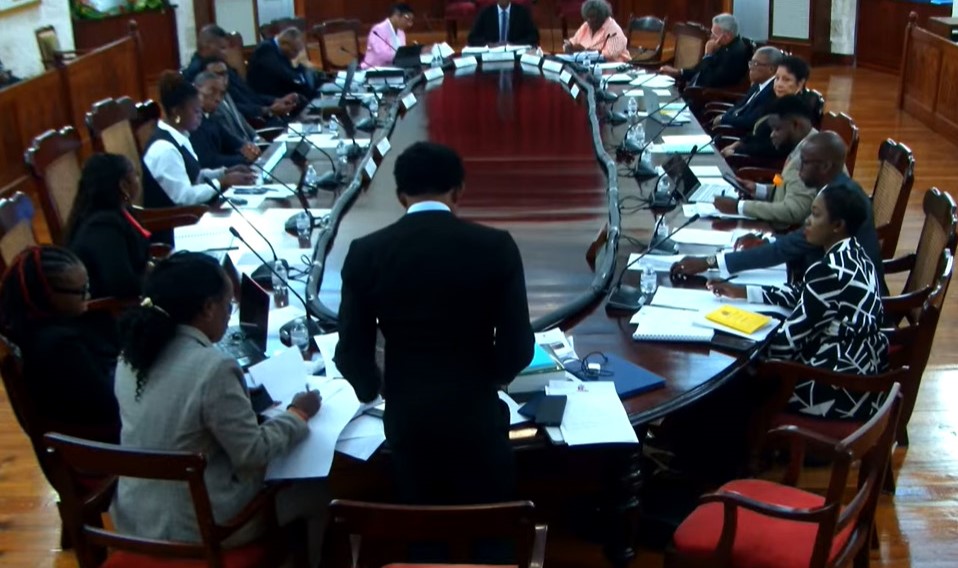
The Barbados Senate has enacted a historic constitutional reform that fundamentally alters parliamentary dynamics by prohibiting elected officials from switching political affiliations without triggering immediate by-elections. The controversial Constitution (Amendment) Bill passed with overwhelming support on Friday evening, receiving 15 votes in favor against only three dissenting voices in the Upper Chamber.
This landmark legislation represents the first formal entrenchment of political parties within Barbados’ post-Independence Constitution, marking a significant departure from traditional parliamentary conventions. The amendment specifically targets the practice of ‘crossing the floor’ – where parliamentarians defect from their elected party to join opposition benches without seeking fresh electoral mandates.
The voting pattern revealed complex political alignments, with four of seven independent lawmakers supporting the government’s position. Opposition Senators Ryan Walters and Karina Goodridge joined independent Senator Reverend Canon Dr. John Rogers in casting dissenting votes, expressing concerns about potential constraints on parliamentary freedom and representative rights. Two independents, Dr. Kenneth Connell and Ryan Forde, abstained from the final vote.
Prime Minister Mia Mottley elevated this constitutional change as a primary governmental priority following her February 11 re-election victory, which secured her Barbados Labour Party all 30 seats in the lower chamber. This move occurred despite recommendations from two independent blue-ribbon panels – the Constitutional Review Commission and Parliamentary Reform Commission – that had previously affirmed parliamentarians’ right to cross the floor based on the constitutional principle that electors choose representatives rather than parties.
Senator Lisa Cummins, Leader of Government Business, defended the legislation during closing debates, asserting that ‘nothing in this legislation prevents persons from having freedom of association’ or prevents dissent within parliamentary proceedings. Deputy Speaker Senator Elizabeth Thompson articulated the government’s perspective, comparing the requirement to household rules: ‘The Barbados Labour Party is making it clear that if you want to exist outside of our political structure, no problem – let the public endorse you again as their parliamentary representative.’
Senator Forde, despite ultimately abstaining, acknowledged the complexity of the issue, stating that while the amendment ‘is not 100 percent wrong nor is it 100 percent right,’ Barbados must ‘make improvements that protect us all’ while maintaining progress toward national rejuvenation.
The amendment effectively eliminates the possibility of opposition voices emerging in the House of Assembly without formal by-elections, fundamentally reshaping Barbados’ political landscape for future parliamentary sessions.