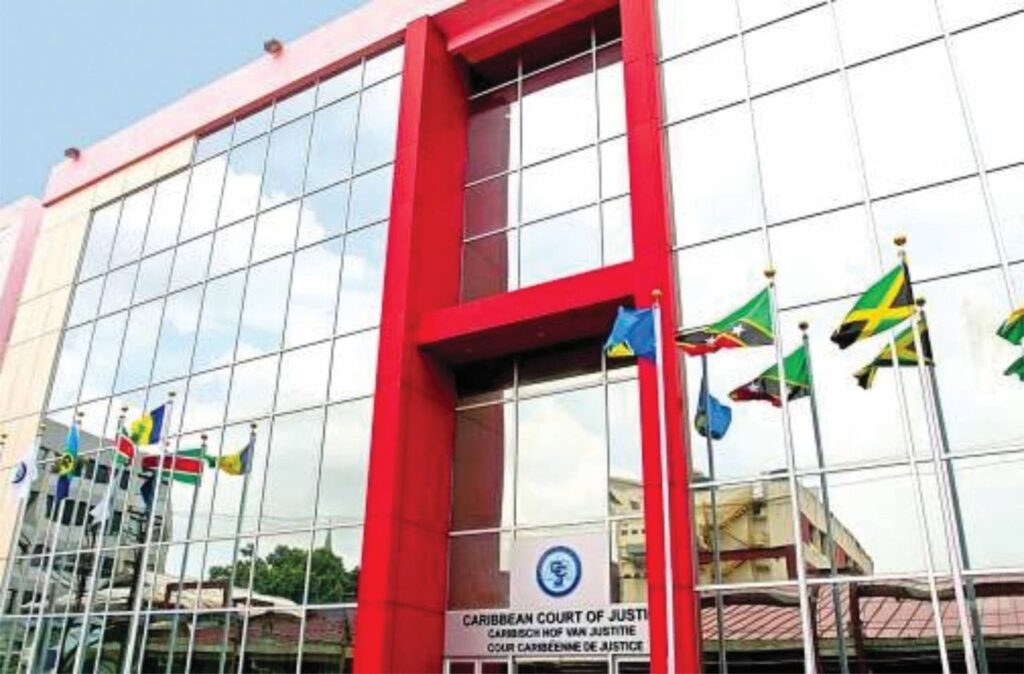
In a definitive ruling with significant implications for regional financial regulation, the Caribbean Court of Justice (CCJ) has formally dismissed an application from Trinidadian citizen Mike Daniel Bhagwansingh seeking to challenge his nation’s banking licensing requirements. The court’s detailed written judgment, released Thursday, follows its initial oral decision rendered on October 7, 2025, after conducting contested proceedings via video-conference.
Bhagwansingh’s legal action contested the mandate under Trinidad and Tobago’s Financial Institutions Act (FIA), which requires individuals to secure a license from the Central Bank prior to conducting any banking business. He contended that this regulatory framework constituted a discriminatory practice, fundamentally violating his right to offer financial services as purportedly guaranteed under the Revised Treaty of Chaguaramas (RTC)—the foundational agreement governing the Caribbean Community (CARICOM) Single Market and Economy.
The CCJ’s adjudication panel anchored its decision on a core principle of regional law: the RTC permits member states themselves, and only in narrowly defined circumstances their private nationals, to initiate claims against another member state. The court determined that Bhagwansingh’s application critically lacked the necessary ‘cross-border element,’ a fundamental threshold for such a challenge. His proposed claim concerned a purely domestic regulatory matter within Trinidad and Tobago, with no demonstrable impact on or connection to trade between CARICOM member states.
Furthermore, the judgment provided crucial clarification on the scope of the RTC, explicitly stating that the treaty does not confer upon individual citizens of a member state an automatic right to provide financial or other services within their own country’s borders. The Court reaffirmed that such internal economic activities remain squarely under the jurisdiction and governance of national laws and domestic regulatory bodies.
Consequently, the CCJ not only dismissed the application for special leave to commence proceedings but also awarded legal costs to the State of Trinidad and Tobago, reinforcing the strength of its dismissal and setting a notable precedent for future interpretations of the RTC concerning national sovereignty over domestic financial regulation.