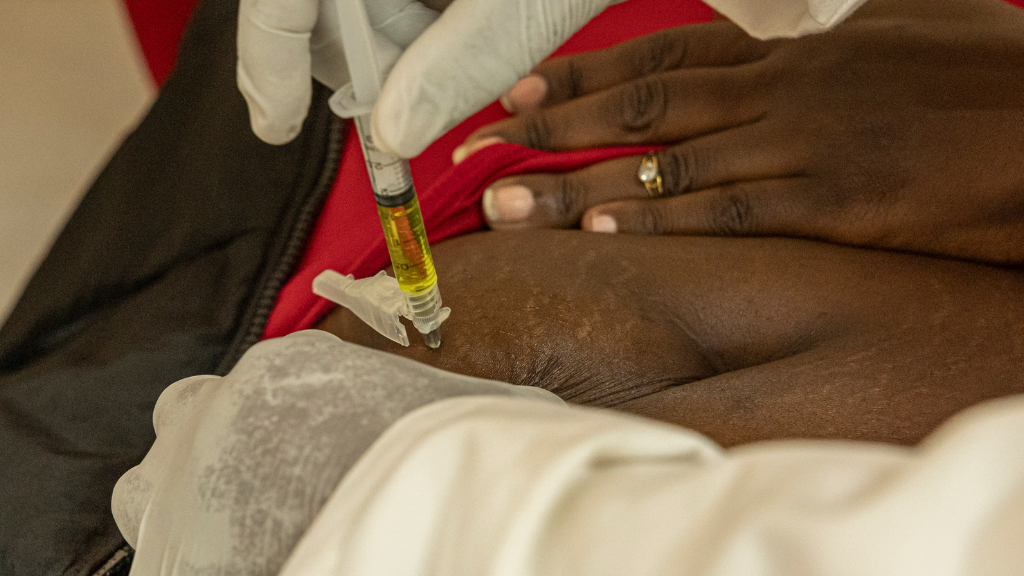
NAIROBI, Kenya — Kenya has initiated a transformative public health program by administering the first doses of lenacapavir, a revolutionary HIV prevention medication requiring just two injections annually. The rollout commenced Thursday in Nairobi’s Kawangware informal settlement, marking a significant advancement in the nation’s HIV prevention strategy.
This pharmaceutical breakthrough demonstrates exceptional efficacy, reducing HIV transmission risk by over 99.9% according to clinical research. Unlike traditional vaccines that stimulate immune response, lenacapavir functions as a long-acting chemical barrier against infection.
Health Minister Aden Duale characterized the initiative as “a moment of hope for thousands of Kenyan families” during the launch ceremony. The medication will be provided free of charge to recipients through a collaborative arrangement involving manufacturer Gilead Sciences and the Global Fund to Fight AIDS. Kenya recently received an initial shipment of 21,000 doses through this partnership.
The introduction addresses critical needs in a nation with approximately 1.3 million HIV-positive individuals, particularly affecting the 15-24 age demographic. Minister Duale emphasized that “many of our young people still face the risk of infection… this innovation gives us renewed strength in our national fight against HIV.”
Community health advocate Carol Njomo highlighted the drug’s advantage of enhanced privacy compared to routine clinic visits for alternative treatments. Early recipients expressed strong support, with 27-year-old Samson Mutua, the inaugural recipient, describing it as “an added protection.” Peace Lawrence, a 23-year-old sex worker, noted the relief from remembering daily oral PrEP medications, acknowledging that “having sex with multiple partners always leaves me in fear.”
Kenya joins eight other African nations selected for lenacapavir implementation, following earlier rollouts in South Africa, Eswatini, and Zambia since December. This medical advancement arrives amid challenges to HIV/AIDS programs across Africa resulting from reductions in United States foreign aid.