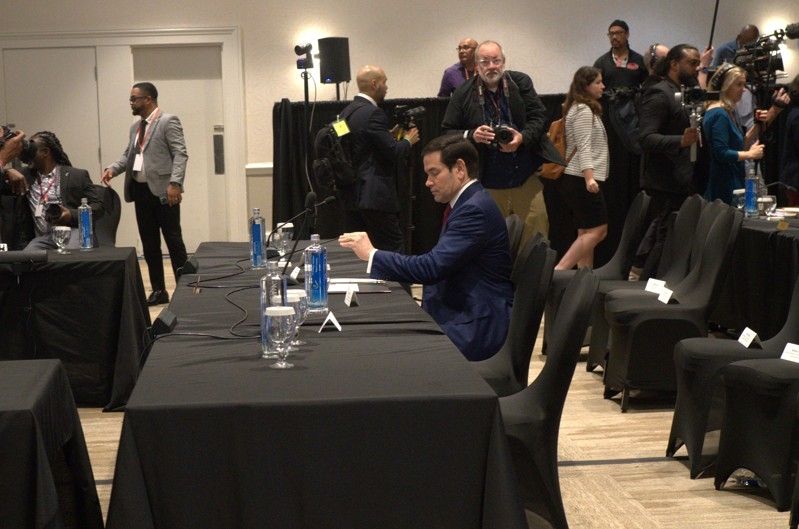
In a significant diplomatic engagement, U.S. Secretary of State Marco Rubio convened with CARICOM leaders in Basseterre, St. Kitts, for comprehensive talks addressing pressing regional and international matters. The closed-door discussions, characterized by participants as fruitful and open, yielded expectations of tangible outcomes in the near future.
Secretary Rubio positioned energy cooperation as a cornerstone of U.S.-Caribbean relations, emphasizing America’s commitment to partnership in responsible resource development. “Energy is critical for every economy to prosper,” Rubio asserted. “Many countries represented here have energy resources that can generate wealth and prosperity for your people, and we want to be your partner in that regard.”
The Venezuela situation featured prominently in discussions, with Rubio acknowledging regional concerns while highlighting substantial progress under interim leadership. The Secretary detailed improvements including prisoner releases, closure of the notorious Helicoide prison, and redirected oil revenues toward public benefit. “Venezuela is better off today than it was eight weeks ago,” Rubio stated, noting the reopening of the U.S. embassy in Caracas and the transition from stability measures to recovery phase operations.
Regional security emerged as another critical agenda item, with Rubio addressing the escalating threat of transnational criminal organizations. These entities, armed with sophisticated weaponry often sourced from the United States, now operate with financial and operational capabilities rivaling nation-states. The Secretary outlined coordinated efforts to combat narcotrafficking networks through targeted designations and law enforcement collaboration.
Prime Minister Dr. Terrance Drew of St. Kitts and Nevis confirmed the constructive nature of the dialogue while maintaining discretion regarding specific negotiation details. The summit signals strengthened U.S.-CARICOM alignment on economic development, security cooperation, and democratic stability in the hemisphere, with further policy developments anticipated in coming weeks.