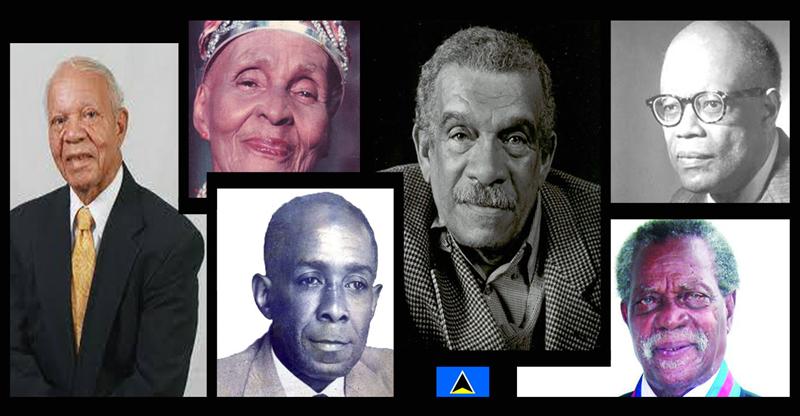
Four decades after former Prime Minister John Compton’s poignant warning, Saint Lucia continues grappling with what he termed “a major deficiency in our national psyche”—the failure to properly honor its nation-builders. His 1983 address during the Simón Bolívar bicentennial celebrations remains strikingly relevant today, highlighting the persistent pattern of treating national heroes as “disposable commodities” rather than foundational pillars of national identity.
This societal shortfall extends beyond ceremonial neglect into the educational realm. Many citizens remain unaware of the architects who shaped Saint Lucia’s political institutions, economic reforms, and cultural identity. The nation heavily relies on fading oral traditions while underinvesting in written documentation, biographical preservation, and structured civic education. This cultural modesty, while admirable, risks evolving into collective amnesia when divorced from deliberate historical preservation.
The psychological inheritance of colonialism further complicates this dynamic. Centuries of external domination conditioned Saint Lucians to seek validation through metropolitan approval and foreign credentials, creating a paradigm where local achievements require double justification. This has fostered ambition coupled with internal hesitation, where even global recognition rarely translates into sustained local reverence.
Legislative frameworks for correction already exist. The National Honours and Awards Act (Chapter 17.08) established by former Prime Minister Kenny D. Anthony provides structures for designating National Heroes through a balanced, bipartisan commission. The criteria are specific and demanding: candidates must have demonstrated visionary leadership, achieved extraordinary excellence benefiting Saint Lucia, or made heroic sacrifices improving socioeconomic conditions.
The existing architecture requires only political will, public engagement, and cultural urgency to activate. Proper implementation could transform civic education through school curricula modules, transparent nomination processes during Independence celebrations, and formal affirmation of living exemplars. Such institutionalization would create a virtuous cycle where recognition inspires contribution, contribution fosters pride, and pride ensures preservation.
As Saint Lucia celebrates another Independence anniversary, substantive pride must replace slogans. It requires rooted knowledge of the nation’s builders, codified in law and reflected in public ceremony. The critical question remains whether Saint Lucia will finally honor its heroes while they can still receive gratitude, transforming Compton’s four-decade-old admonition into meaningful action.