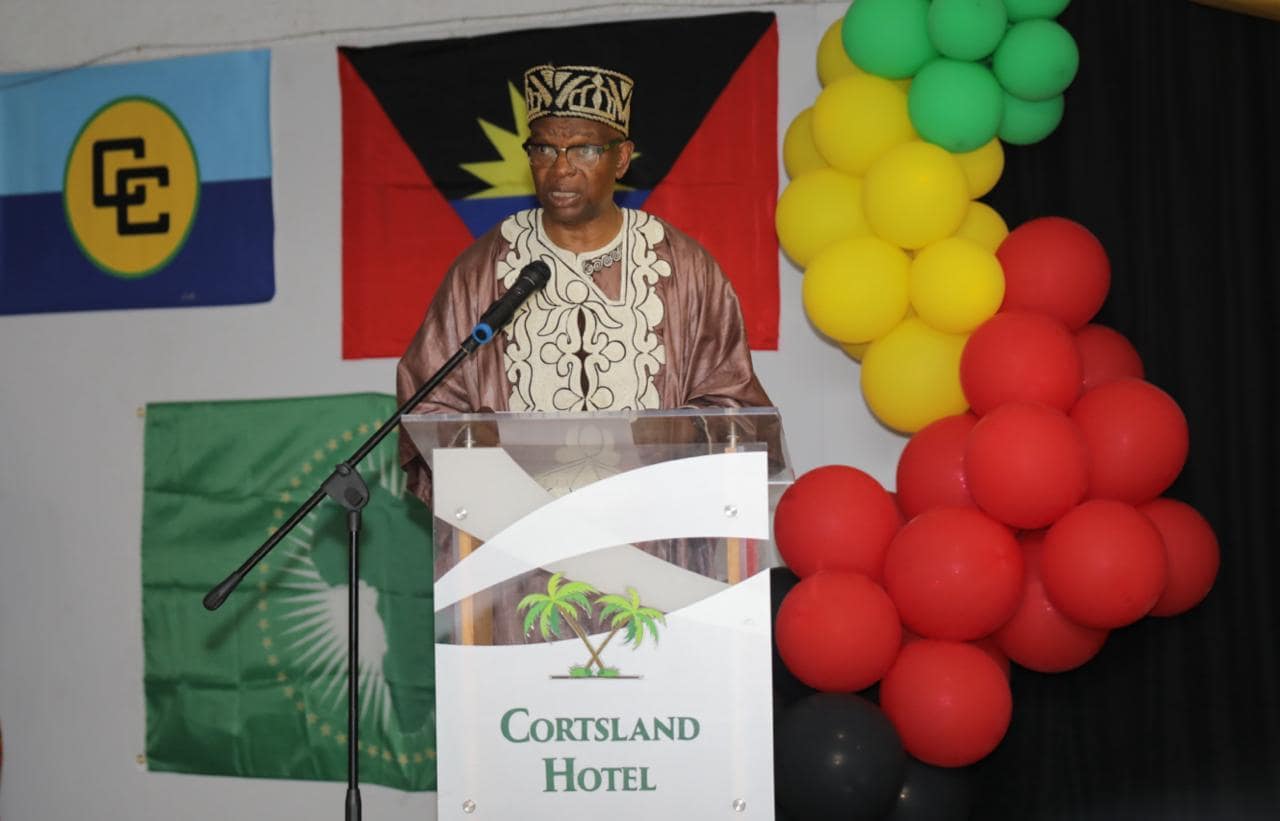
A profound educational transformation is urgently needed across Caribbean academic institutions, argues Dr. Lenworth Johnson, an Antiguan scholar and former parliamentarian. The current celebration of Heritage Month (February) in Antigua and Barbuda—modeled after the American Black History Month—remains incomplete without substantive integration of Africa’s comprehensive historical narrative into formal education systems.
The historical context traces back to 1924 when Carter G. Woodson, the pioneering Black American educator, established Negro History and Literature Week (later Negro History Week and eventually Black History Month). Woodson strategically selected February to honor both Abraham Lincoln and W.E.B. Dubois. While these observations represent progress, Dr. Johnson contends they remain insufficient without addressing fundamental curricular gaps.
Critical analysis of the Caribbean Secondary Education Certificate (CSEC) and Caribbean Advanced Proficiency Examination (CAPE) syllabi reveals a startling omission: African history receives merely token acknowledgment through a single overview of 15th-century West African societies. This limited approach effectively positions Afro-Caribbean history as beginning with the trans-Atlantic slave trade, rather than recognizing Africa’s millennia of pre-colonial civilization, innovation, and political complexity.
Dr. Johnson advocates for teaching Africa’s complete historical trajectory—from ancient civilizations to modern developments—across primary, secondary, and tertiary education. This includes Egypt’s recognition as a Black civilization that pioneered advancements in medicine, engineering, and architecture; the sophisticated kingdoms of Mali, Ghana, Songhai, and Asante; and visionary leaders like Mansa Musa, Queen Hatshepsut, and Shaka Zulu.
The urgency of this educational reform is underscored by contemporary attempts to diminish Black historical significance. Recent incidents—including textbook alterations in Florida and Texas and racially derogatory depictions of prominent Black figures—demonstrate persistent efforts to reinforce false narratives of Black inferiority. These actions perpetuate the original justification for slavery: that Black people were historically insignificant and intellectually inferior.
Drawing from Marcus Garvey’s philosophy that historical knowledge provides cultural roots, and Peter Tosh’s affirmation of African identity, Dr. Johnson proposes two solutions: either significantly expand African history components within existing Caribbean studies curricula or establish African history as a standalone subject. While acknowledging the challenges of curricular reform, he emphasizes that fostering racial pride through comprehensive historical education remains essential for combating systemic racism and achieving true liberation.