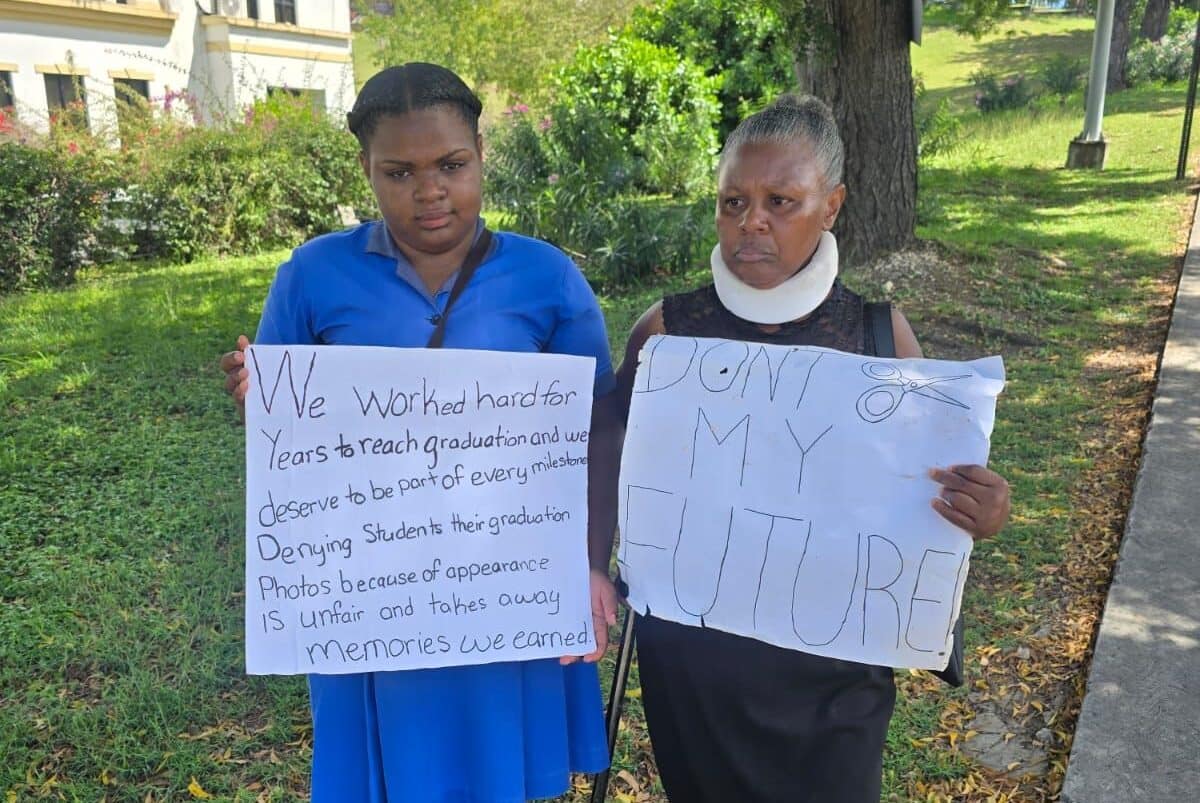
A stringent enforcement of appearance guidelines at Antigua Girls’ High School has triggered significant controversy, resulting in approximately 18 fifth-form students being excluded from their yearbook photography session. The incident occurred when administrators determined the students violated established grooming policies by wearing hair extensions, artificial eyelashes, and excessive makeup.
The school’s previously distributed memorandum explicitly limited cosmetic applications to minimal coverage of skin imperfections while expressly prohibiting hair enhancements including extensions, weaves, wigs, and decorative braids. This document additionally outlined comprehensive graduation prerequisites encompassing attendance records, academic assessment submissions, return of state-provided materials, and restrictions on serious behavioral violations.
Education Director Clare Browne substantiated the school’s position, clarifying that ministry-approved regulations for government educational institutions expressly forbid hair extensions unless special medical exemptions apply. Browne further emphasized that the limited makeup allowance was exclusively sanctioned for photographic purposes and did not indicate any broader liberalization of the institution’s appearance standards.
The enforcement decision prompted approximately ten concerned parents to visit the school campus seeking explanations. According to parent Shamika Rose, school administrators declined to address their concerns directly, resulting in security personnel escorting the parents from the premises. Rose additionally alleged inconsistent policy application, contending that some students with similar appearance violations were permitted to participate in photography sessions while others were excluded.
Addressing rumors regarding potential graduation prohibitions for affected students, Director Browne clarified that any such determinations would require formal approval procedures. He indicated that punitive measures must demonstrate proportionality to the violation and suggested that exclusion from graduation ceremonies would likely be deemed excessively severe upon appellate review.
The controversy emerges alongside ongoing graduation preparations, including fee collection deadlines established for June 5th. Rose specifically refuted circulating suggestions that paid graduation fees might become non-refundable should students be prevented from participating in ceremonies.
School administrators have scheduled a formal meeting with affected families for Tuesday, where officials will determine whether students will receive opportunities to retake yearbook photographs and address potential additional consequences stemming from the policy violations.