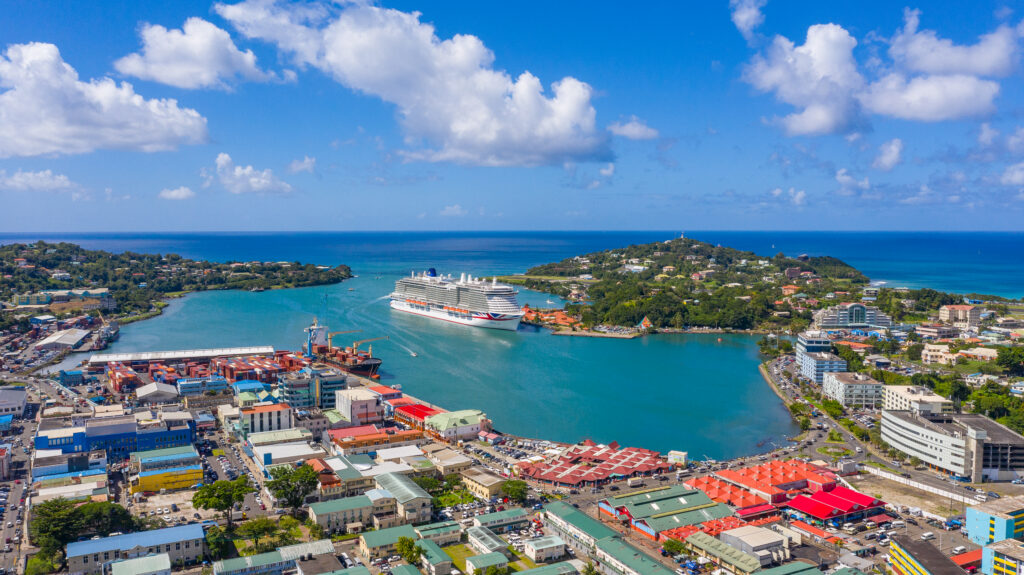
The historic Port Castries stands as a living testament to Saint Lucia’s complex colonial past and evolving economic identity. Nestled within a former volcanic crater, this strategic harbor has served as a crucial Atlantic gateway for centuries, originally named “Le Carenage” (safe anchorage) by French colonizers during World War II.
Throughout its layered history, the port has undergone remarkable transformations. During the 19th century, it emerged as the British Empire’s principal coaling station in the Eastern Caribbean, capable of accommodating the largest warships of the colonial era. The western wharf constructed in 1835 facilitated this vital trade, with the first steamship RMS Solway arriving in 1841.
The port’s strategic importance came at a cost during wartime. In a daring 1942 attack, a German U-boat torpedoed the British cargo ship SS Umtata while docked alongside RMS Lady Nelson, resulting in the tragic loss of 41 lives whose remains rest at Choc cemetery.
Economic transitions reshaped the port’s function throughout the 20th century. As coal exports waned in the 1930s, sugarcane cultivation took precedence, later giving way to banana exports in the 1950s. The port buzzed with activity during “banana days” when Geest Industries exported thousands of boxes of “green gold” to European markets from Berth 6.
Following independence in 1979, Saint Lucia strategically pivoted toward tourism. Cunard—once part of the port’s coaling history—became the first cruise line to establish regular calls at Port Castries. Today, the port welcomes hundreds of thousands of cruise passengers annually, with January 2024 alone seeing 150,323 visitors.
The Saint Lucia Air and Seaports Authority (SLASPA), managing the port since 1983, has garnered international recognition including the Caribbean Shipping Association’s Nathan Dundas Cruise Port of the Year Award.
A new chapter unfolds as the government partners with Global Port Holdings to redevelop the waterfront. Saint Lucia Cruise Port confirms plans to integrate the harbor’s rich heritage into the transformation project, acknowledging that authentic historical narratives will enhance visitor experiences through immersive educational environments.
As Saint Lucia celebrates its 47th independence anniversary, Port Castries continues to embody the nation’s resilience—a symbol of cultural evolution, community identity, and enduring strategic importance in the Caribbean basin.