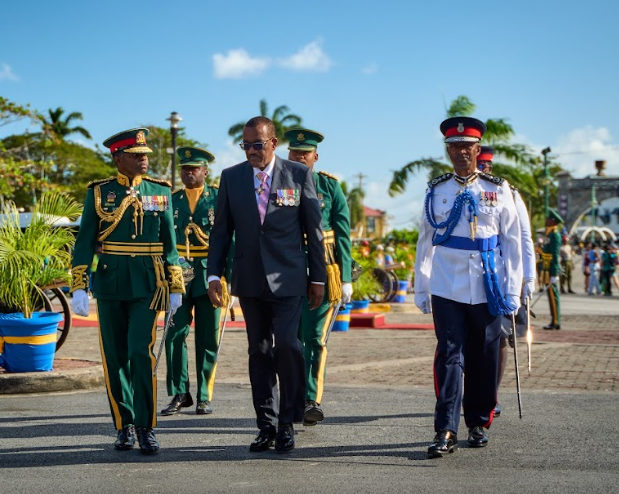
Barbados has been thrust into a constitutional and political discourse following President Jeffrey Bostic’s unexpected appointment of opposition senators, a move that has significantly altered the island’s parliamentary landscape. In a decisive Friday announcement, the President selected Ryan Walters of the Democratic Labour Party (DLP) and Karina Goodridge, leader of the Friends of Democracy movement, despite the DLP’s submission of only two nominees for consideration.
The development concludes a week of intense speculation after the DLP, which secured the second-highest vote count in the last general election, presented just two names to the President despite reportedly being asked to provide at least four nominees. The party’s strategic decision to limit its submission has backfired spectacularly, according to political observers, handing an unexpected victory to smaller political entities.
Political scientist Deveron Bruce analyzed that ‘had the Democratic Labour Party done what the President would have asked them to do, I would not have expected Karina’s name to be on that listing.’ He characterized Goodridge as ‘a silent winner in the DLP’s debacle,’ noting that the party’s attempt to influence the outcome through limited nominations ultimately weakened their position.
Constitutional experts including pollster Peter Wickham have defended the President’s decision as firmly within his legal authority. ‘The Constitution is clear that the choice is his, his own deliberate judgement,’ Wickham stated, adding that the DLP’s attempt to ‘tie his hand’ by providing only two names placed the Head of State ‘in a most unfortunate position.’
The appointments have triggered broader implications for Barbados’s political hierarchy. Wickham suggested the move effectively establishes Ryan Walters as the DLP’s political leader overnight while questioning party president Ralph Thorne’s future leadership viability. More significantly, analysts identify this episode as indicative of a fundamental transformation in Barbadian politics, where emerging movements are increasingly challenging traditional parties’ historical dominance, regardless of electoral vote shares.
The controversy highlights evolving democratic dynamics in Barbados, where constitutional discretion appears to be taking precedence over conventional political expectations, potentially signaling a new era of multiparty influence in the nation’s governance.