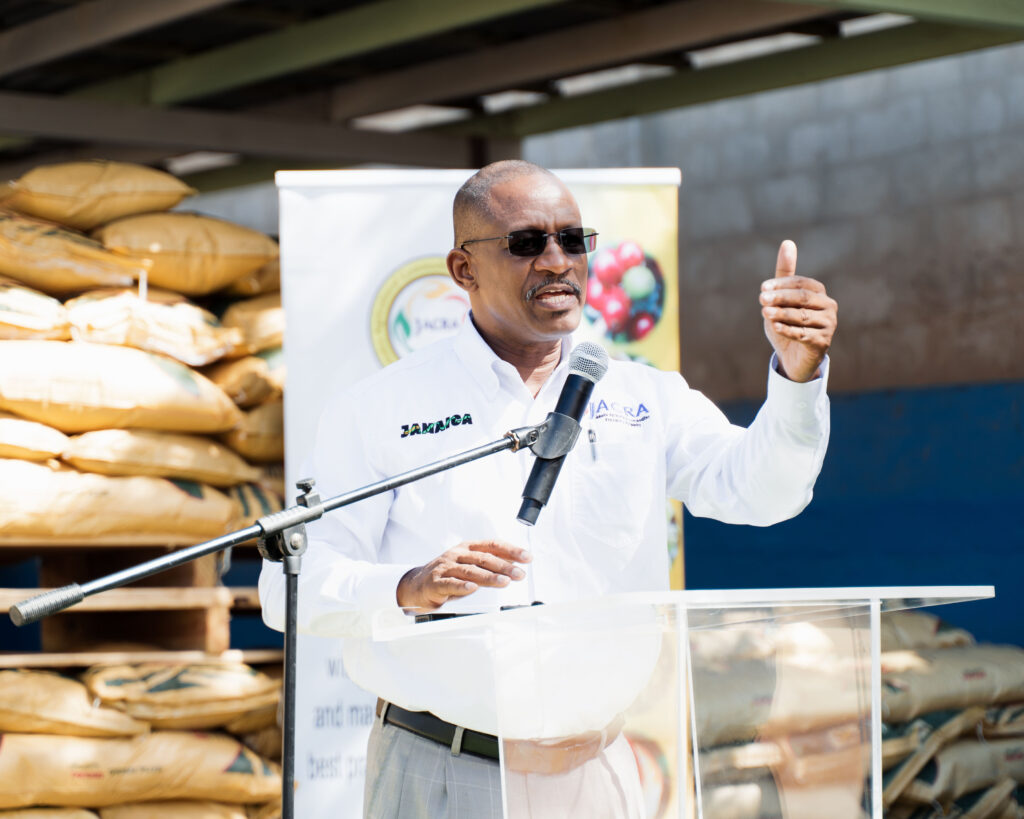
KINGSTON, Jamaica—In response to mounting concerns from local coffee growers, the Jamaica Agricultural Commodities Regulatory Authority (JACRA) has announced an ambitious national education initiative designed to clarify the complex economic factors determining coffee box prices.
The decision follows persistent expressions of dissatisfaction from agricultural producers regarding compensation levels for their harvests. JACRA Director General Wayne Hunter acknowledged the farmers’ frustrations while emphasizing the organization’s limited influence over market dynamics. “Neither JACRA nor any government minister possesses authority to establish coffee prices,” Hunter stated. “These are determined exclusively by market forces incorporating global benchmarks, quality specifications, and supply-demand equilibrium.”
The comprehensive awareness campaign will elucidate multiple aspects of coffee economics, including international benchmark price mechanisms, the distinction between farmgate and export valuations, and detailed cost structures throughout the production chain. Additionally, it will provide guidance on enhancing profitability through advanced agricultural techniques and post-harvest processing methods that maximize quality premiums.
Hunter stressed the program’s foundational philosophy: “Empowering farmers with complete comprehension of pricing derivation—from worldwide market fluctuations to processing and export expenses—represents our primary objective. Knowledge translates to operational advantage as we simultaneously educate and regulate.”
The regulatory body reaffirmed its dedication to industry transparency, competitive practices, and long-term sustainability. JACRA, the Ministry of Agriculture, Fisheries and Mining, and the Jamaican government collectively maintain that coffee pricing remains market-driven, subject to intricate local and international variables including commodity exchange trends, quality parameters (bean dimensions, defect rates, moisture levels), processing overheads, currency exchange volatility, and production input costs.