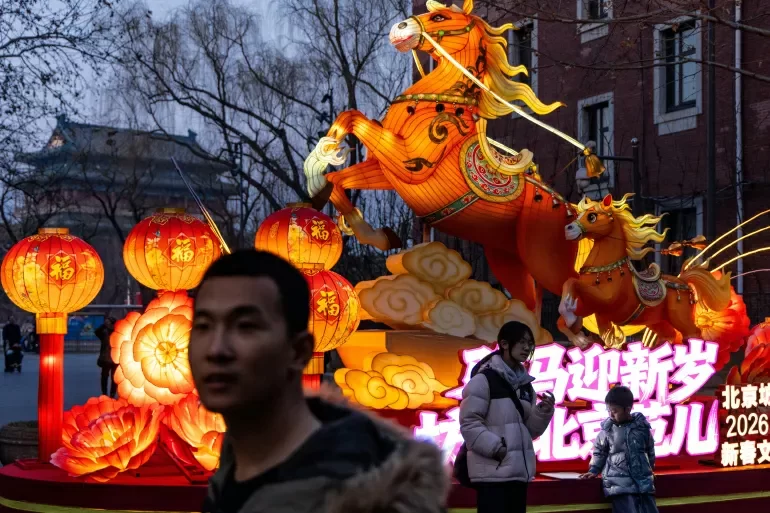
China commenced its most significant cultural celebration on Tuesday as approximately 1.4 billion people welcomed the Lunar New Year, marking the beginning of the Year of the Fire Horse. This rare astrological combination—occurring only once every six decades—signals a period brimming with optimism, dynamic energy, and unexpected opportunities, according to traditional Chinese zodiac interpretations.
The Spring Festival, renowned for triggering the planet’s largest annual human migration known as Chunyun, witnesses hundreds of millions traversing the nation for family reunions. This mass movement coincides with a substantial economic stimulus for the world’s second-largest economy, traditionally export-dependent but now increasingly focused on domestic consumption.
Extended festivities spanning nine days—one day longer than typical—feature elaborate traditions including thorough home cleaning, decorative displays of red lanterns and prosperity symbols, elaborate family banquets, and the customary exchange of red envelopes containing monetary gifts symbolizing luck and blessings. The celebrations will culminate in the Lantern Festival, characterized by spectacular fireworks, vibrant dragon and lion dances, and bustling markets across urban and rural landscapes.
Economically, the festival generates unprecedented consumption spikes across retail sectors including food, festive commodities, entertainment, and tourism. Government projections indicate a record-breaking 9.5 billion passenger journeys during the 40-day festive period, supplemented by state-issued consumer vouchers exceeding 360 million yuan (approximately $52 million) to further stimulate domestic spending. This aligns with China’s broader five-year plan to boost household expenditure, currently constrained by high savings rates approaching one-third of income.
Technological advancements took center stage during the annual Lunar New Year’s Eve gala, where humanoid robots delivered a groundbreaking collaborative martial arts demonstration, showcasing Beijing’s rapid progress in robotics and artificial intelligence.
The celebrations transcend national borders, with distinct cultural observances throughout East and Southeast Asia. Vietnam celebrates Tết Nguyên Đán with family gatherings and traditional foods like bánh chưng, while South Korea observes Seollal with ancestral rites and tteokguk soup. Multicultural societies including Singapore and Malaysia recognize the festival with official holidays, while diaspora communities in major global cities like San Francisco, London, and Sydney host large-scale parades, dragon boat races, and pyrotechnic displays.
Adding contemporary cultural resonance, the Year of the Horse acquired an unexpected mascotte through linguistic coincidence: Draco Malfoy, the notorious antagonist from the Harry Potter franchise. The Mandarin transliteration of his name—”马耳福” (Mǎ ěr fú)—incorporates the character for “horse” (马) and concludes with “blessing” (福), creating an auspicious connection embraced by popular culture.