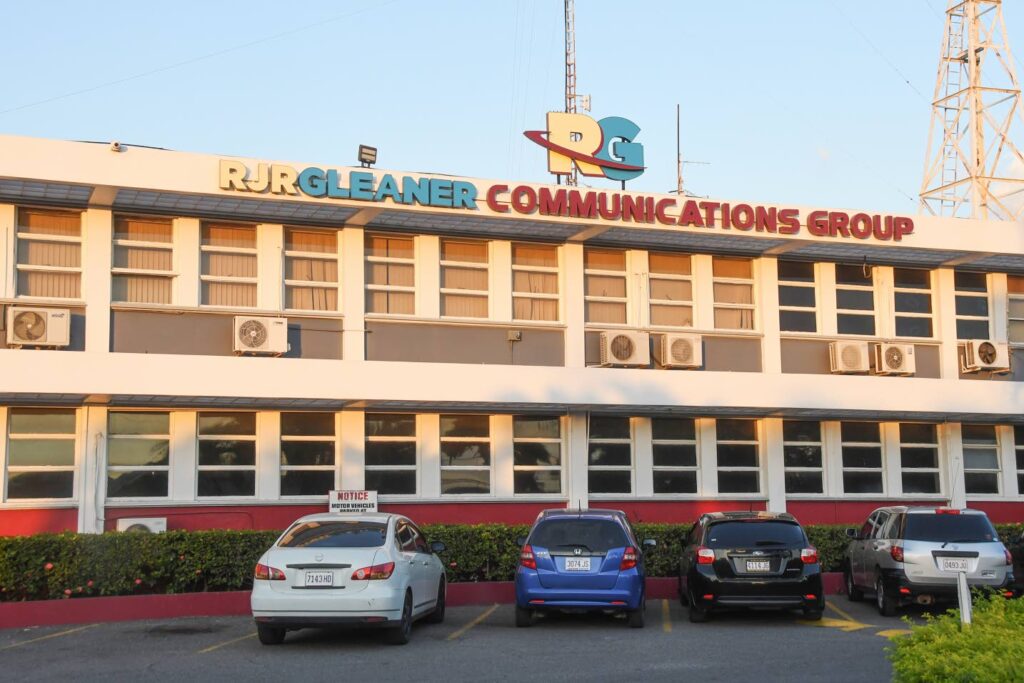
Jamaica’s premier media conglomerate, Radio Jamaica Limited (RJR), confronts a deepening financial crisis as its nine-month deficit ballooned to $502 million. This alarming figure, markedly wider than the $329 million loss recorded during the comparable period last year, signals intense strain on the advertising-dependent enterprise, compelling a comprehensive corporate overhaul.
The company’s revenue stream suffered a severe contraction, plummeting by $489 million—a 12.1 percent annual decline—by December. The final quarter proved especially devastating, with revenues crashing 28.8 percent. While management had previously flagged a 10 percent revenue shortfall by mid-year, Hurricane Melissa’s disruptive impact in the December quarter exacerbated these weaknesses, causing advertisers to abruptly suspend expenditures. This accelerated a pre-existing downward trend, transforming what may have been cyclical softness into evident structural fragility.
Despite implementing cost-cutting measures that slashed expenses by approximately $376 million, the sheer magnitude of falling revenues completely negated these savings. Operating leverage consequently turned adversarial. The quarter ending December alone generated a staggering after-tax loss of $242 million, dwarfing the $58.8 million deficit from the year before.
A glimmer of operational discipline emerged as net cash utilized in operations decreased to $161.8 million from $250.7 million. However, this apparent stabilization was artificially propped up by $500 million in new borrowing. These loans bolstered period-end cash reserves to $270 million but simultaneously escalated long-term debt to approximately $856 million, effectively exchanging liquidity for heightened financial leverage amid persistent negative earnings.
In response, RJR has pivoted from incremental austerity to radical structural transformation. The group is streamlining its corporate framework by consolidating 13 principal entities into three, centralizing governance, and merging support functions. Management is also advancing a joint printing initiative and evaluating property rationalization strategies to fundamentally simplify and reduce its cost structure. These decisive actions underscore a recognition that margin recovery cannot hinge solely on a rebound in advertising revenue.
The restructuring agenda enjoys solid backing from dominant shareholders. The top ten investors collectively control 61.48% of the company, with directors Joseph M. Matalon and Peter Melhado each holding 15.59% and Douglas Orane maintaining a 14.19% stake.
For the market, the pivotal inquiry now transcends RJR’s capacity for further cost reduction. It centers on whether the company can stabilize its revenue foundation in an evolving media landscape where advertising budgets are increasingly fragmented across digital and global platforms. Without achieving this stabilization, operational efficiencies may merely decelerate losses rather than engineer a genuine financial turnaround. These results indicate that RJR’s future resilience will equally depend on strategic balance-sheet management and its ability to maintain audience relevance.