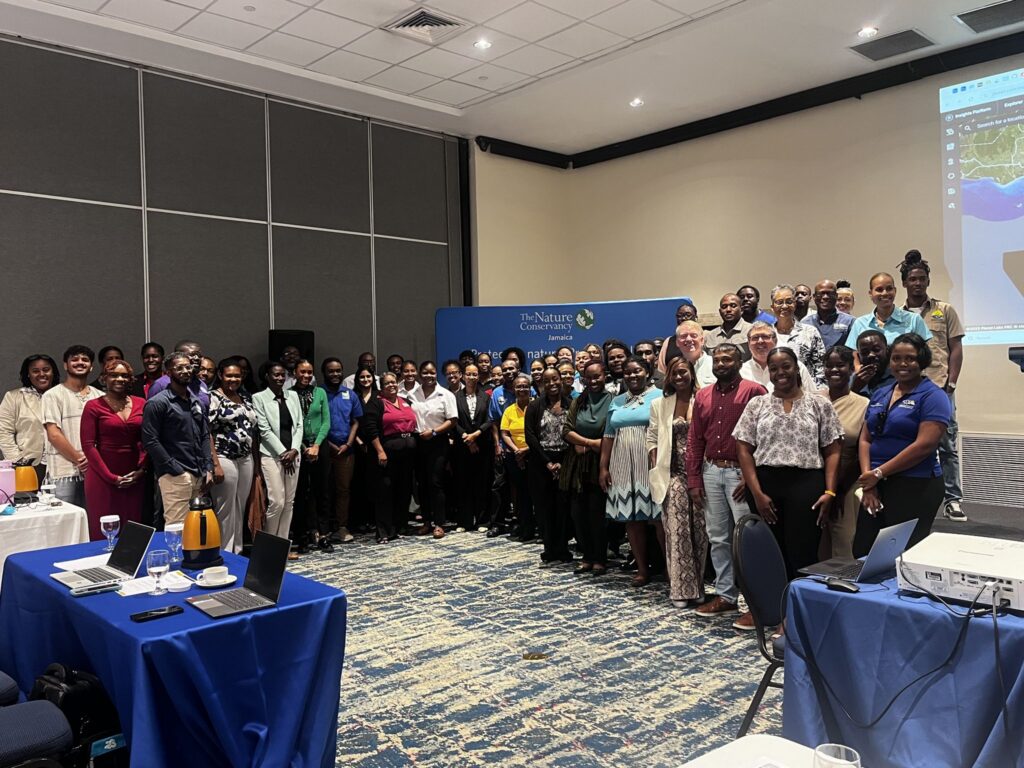
KINGSTON, Jamaica—In a significant capacity-building initiative, The Nature Conservancy (TNC) convened over 60 government officials and environmental specialists for a comprehensive science workshop on February 9-10. The event, held at the Jamaica Pegasus Hotel, focused on leveraging geospatial data for detecting changes in vulnerable coastal ecosystems.
The intensive two-day program addressed the critical need for advanced monitoring tools as Caribbean nations face increasing frequency and intensity of extreme weather events. Participants engaged with cutting-edge remote sensing methodologies using PlanetScope and Sentinel-2 satellite imagery to evaluate hurricane impacts on marine and coastal environments.
Under the guidance of Dr. Steve Schill, TNC’s Caribbean Lead Scientist, and other technical experts, the workshop blended theoretical foundations with practical applications. Day one established core remote sensing principles, including assessment requirements and software options ranging from proprietary to open-source platforms. Attendees gained proficiency in field data collection techniques and learned to access satellite imagery from both public and private sources.
The training featured demonstrations of cloud-based analytical tools, notably Google Earth Engine, showcasing how integration of satellite data with field observations enables rapid, precise change detection. “Remote sensing allows hurricane impact assessment within days, while drones can map damage once weather conditions stabilize,” Dr. Schill explained.
Day two progressed to hands-on image processing using industry-standard software including ArcGIS Pro and QGIS. Non-governmental organization representatives additionally trained with Kobo Toolbox and Google Earth Pro, analyzing sample datasets to evaluate ecological changes in mangrove forests, seagrass beds, and sandy shorelines. These practical sessions were specifically designed to enhance skills applicable to both immediate post-disaster evaluations and sustained coastal monitoring efforts.
Donna Blake, TNC Jamaica’s Program Director, emphasized the critical importance of reliable environmental data: “Timely information is essential for transforming post-disaster assessments into informed policy and investment decisions. Building technical capacity ensures our restoration efforts remain evidence-based and aligned with national resilience objectives.”
This capacity-building initiative ultimately strengthens Jamaica’s ability to monitor and report on climate commitments related to coastal ecosystems while significantly improving the efficiency and accuracy of environmental assessments following major disturbances.