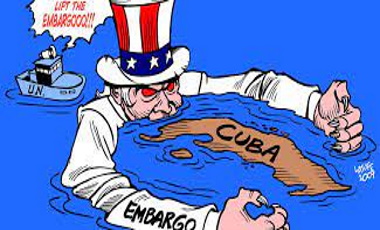
BRIDGETOWN, Barbados – Barbados’ Ambassador to the Caribbean Community (Caricom), David Comissiong, has characterized the current situation in Cuba as a severe humanitarian crisis requiring immediate international response. In a compelling letter, Comissiong emphasized the special historical relationship between Caricom nations and Cuba, urging collective action from governments and citizens of conscience worldwide.
The crisis has intensified since January when the Trump administration moved to disrupt oil supplies powering Cuba’s energy grid and critical infrastructure. US Secretary of State Marco Rubio suggested economic reforms could ease pressure but declined to specify conditions, emphasizing that Cuba must grant greater economic freedom alongside political reforms.
Recent developments saw Mexican humanitarian aid ships docking in Havana, with President Claudia Sheinbaum vowing additional support while prioritizing Cuba’s sovereignty. Meanwhile, social media has amplified heartrending accounts from Cuban citizens describing elderly patients dying without medication, neonatal incubators shutting down from fuel shortages, and what Comissiong termed ‘terrorism through hunger’ via deliberate US policies.
The diplomat invoked the 1972 defiance of four Caribbean leaders – Prime Ministers Eric Williams, Michael Manley, Forbes Burnham and Errol Barrow – who broke regional isolation policies against revolutionary Cuba. This historic action established embassies across independent Caricom nations and initiated decades of Cuban assistance in medicine, education, sports, agriculture and disaster response.
Comissiong called for urgent provision of food, medical supplies, solar energy equipment and other essentials. He highlighted that for 33 years, the UN General Assembly – excluding only the US and Israel – has voted to condemn the American embargo. Notably, all permanent UN Security Council members (France, China, UK and Russia) consistently supported anti-embargo resolutions.
The ambassador challenged these nations to ‘put their money where their mouths are’ by supplying oil despite US tariff threats, arguing that as permanent Security Council members they bear special responsibility to uphold international law. Comissiong warned that the assault on Cuba represents a broader threat to multilateralism and the UN system itself, concluding that assisting Cuba constitutes both a moral duty and a crucial step in preserving global order and safety.