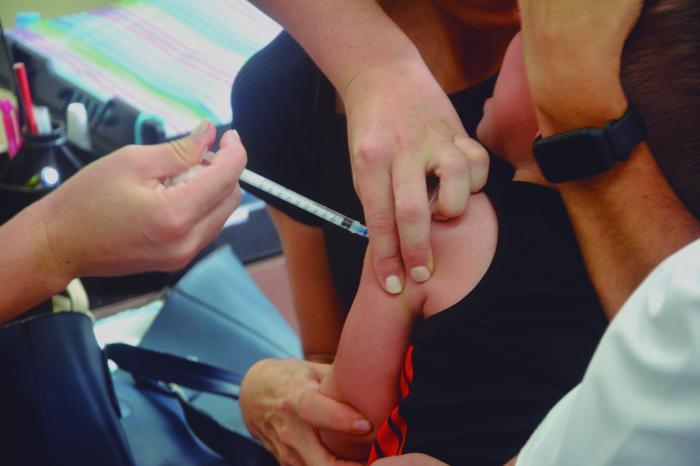
The Finlay Vaccine Institute of Cuba is making significant strides in developing advanced pneumococcal vaccines, with two candidates—Quimi-Vio 11 and Quimi-Vio 16—progressing through accelerated development pathways. This initiative aims to safeguard vulnerable populations using proven conjugation technology that has demonstrated both efficacy and safety.
Quimi-Vio 11, currently in Phase II-III clinical trials, represents a groundbreaking approach by targeting both older adults and infants. The vaccine candidate incorporates four additional serotypes beyond the original heptavalent formula, addressing serotypes with significant disease incidence. Adult trials are underway in Havana health institutions, while pediatric studies are being conducted in Cienfuegos, Santiago de Cuba, and soon expanding to the capital.
The development builds upon the success of Quimi-Vio® (heptavalent), which received national registration in 2024 after demonstrating remarkable effectiveness. In Cienfuegos province, where 93% of children aged 1-5 were vaccinated between 2017-2019, mortality rates from pneumococcal meningitis and other invasive diseases dropped from 3.1-9.1 per 10,000 infants to zero—a reduction that has been maintained despite the COVID-19 pandemic.
Dr. Darielys Santana Medero, head of the pneumococcal vaccine project, emphasized the severity of Streptococcus pneumoniae infections, which cause approximately 1.6 million global deaths annually according to WHO estimates. The bacterium leads to invasive diseases including acute meningitis, pneumonia with pleural effusion, and bloodstream infections, particularly affecting children under five and elderly populations.
The institute’s director general, Dr. Yury Valdés Balbín, highlighted the unique advantages of their conjugation platform technology, which has enabled rapid development of the new candidates. Quimi-Vio 16, targeting 16 serotypes, is already undergoing animal model evaluations, adding five epidemiologically relevant serotypes beyond the Quimi-Vio 11 formulation.
The vaccine program, ongoing for over two decades, represents a significant achievement of Cuban biotechnology, overcoming substantial scientific, chemical, and technological challenges. The name ‘Quimi-Vio’ honors scientist Violeta Fernández Santana, a principal researcher and promoter of the project who passed away in 2011.