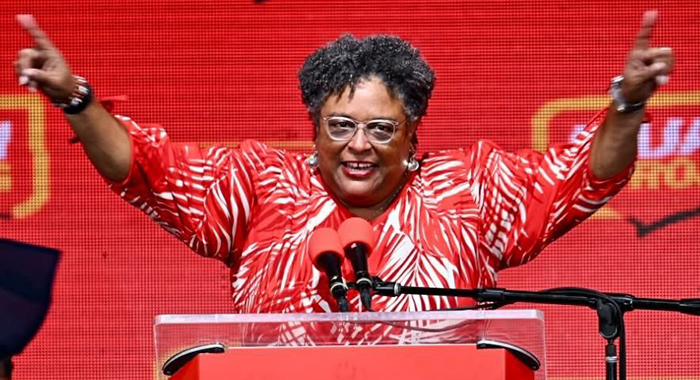
In an unprecedented political triumph, Prime Minister Mia Mottley has secured her place in Caribbean history by leading the Barbados Labour Party (BLP) to a third consecutive parliamentary whitewash in Wednesday’s general election. The 60-year-old leader becomes the region’s second politician to achieve complete parliamentary dominance on three occasions, following former Grenada Prime Minister Keith Mitchell’s earlier accomplishment.
Mottley’s victory marks a significant milestone as she becomes the first party leader to secure three consecutive terms while maintaining complete parliamentary control since initially winning all 30 parliamentary seats in 2018, when she made history as Barbados’ first female prime minister.
The victorious prime minister comfortably retained her St. Michael North East constituency and addressed supporters at the party’s Bridgetown headquarters, announcing that her new cabinet will be sworn in on Monday, with Parliament’s first session scheduled for February 20.
Reflecting on her administration’s journey, Mottley acknowledged the unexpected challenges her government faced, particularly the COVID-19 pandemic that disrupted their initial plans for economic growth. “We did not come to hold office, we come to make Barbados better and your lives better,” she emphasized, highlighting the government’s ongoing transformation mission during the past two and a half years.
The legal professional turned politician stressed the importance of maintaining democratic institutions as Barbados approaches its 60th independence anniversary and fifth year as a republic. She expressed concern about the opposition Democratic Labour Party’s (DLP) situation, emphasizing Barbados’ need for “strong institutions” and recalling her previous efforts to ensure opposition representation in the Senate.
The DLP suffered another devastating defeat, with leader Ralph Thorne losing his St. John’s constituency to BLP candidate Charles Griffith. Thorne, who previously represented Christ Church South for the BLP before crossing the floor, described the outcome as “disappointing” despite what he characterized as a clean campaign. He additionally claimed he was denied voting rights due to an administrative error by the Electoral and Boundaries Commission.
Political analysts delivered harsh assessments of the opposition’s performance. University lecturer and former DLP president Ronnie Yearwood stated the electorate had delivered a “clear message” requiring party reform, while prominent pollster Peter Wickham described the DLP campaign as “horrible” and called for leadership change and new talent identification.
Historically, this election marked the first time Barbados welcomed international observer missions from CARICOM and the Commonwealth, signaling the nation’s growing prominence in democratic practices within the Caribbean community.