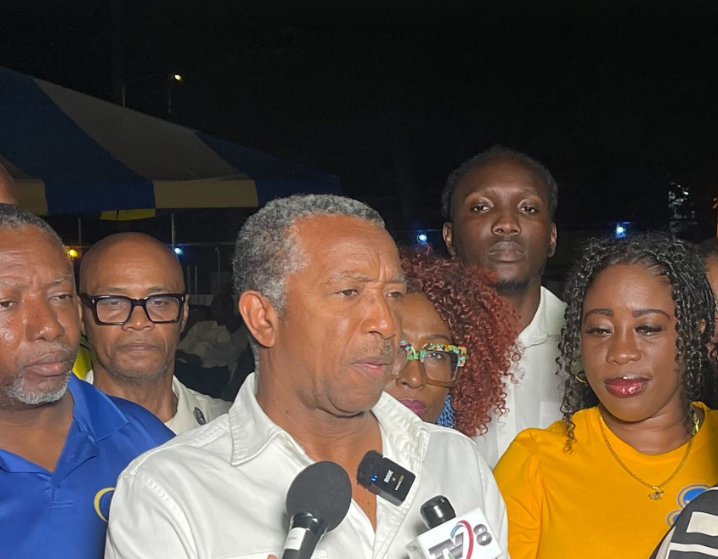
In the aftermath of an unprecedented third consecutive electoral sweep by the ruling Barbados Labour Party, Democratic Labour Party President Ralph Thorne has announced his resignation from leadership. The devastating 30-0 defeat marks a continuing political crisis for Barbados’ main opposition party, which hasn’t secured a parliamentary seat since 2018.
Addressing reporters at the party’s George Street headquarters in the early hours of Thursday morning, Thorne characterized the outcome as “very disappointing” while maintaining that the 70-year-old institution remained “resourceful” and capable of rebuilding under new leadership. “Clearly, the time comes when I must pass on to other persons,” stated Thorne, surrounded by defeated DLP candidates. “This is a democratic organization. I do not write political will and a new leader will emerge in the fullness of time.”
The night’s results delivered Prime Minister Mia Mottley’s BLP a historic ‘three-peat’ victory, maintaining their complete control of the House of Assembly. Several constituencies initially appeared competitive before ultimately swinging to the governing party. In St. John, a traditional DLP stronghold, Thorne himself garnered 1,884 votes against incumbent Charles Griffith’s 2,327.
Other closely-watched races included St. Michael North West, where BLP’s Neil Rowe defeated Ryan Walters 1,674 to 1,441, and St. Lucy, where Peter Phillips secured victory over DLP’s Ian Griffith by 2,211 to 2,026 votes. In St. Philip West, Dr. David Estwick’s narrow early lead evaporated as Kay McConney ultimately triumphed 2,740 to 2,187.
Thorne’s tenure as leader was marked by internal turmoil from its inception. His dramatic 2024 defection from the BLP backbench to assume opposition leadership—initially as the House’s sole non-government member—generated immediate controversy. This move exacerbated existing tensions within the DLP regarding party democracy and control, particularly from figures like former general secretary Steve Blackett.
Despite the overwhelming defeat, Thorne emphasized the positive aspects of the campaign, stating the party had set an example for Barbados’ youth by conducting a “clean” campaign. “We fought the good fight, we finished the course, and we kept our faith,” he reflected, expressing gratitude for the “amazing comradeship” and “genuine affection” within his team of young candidates.
The resignation signals a critical juncture for the Democratic Labour Party as it confronts its increasingly marginalized position within Barbados’ political landscape and seeks to redefine its purpose and leadership ahead of future electoral challenges.