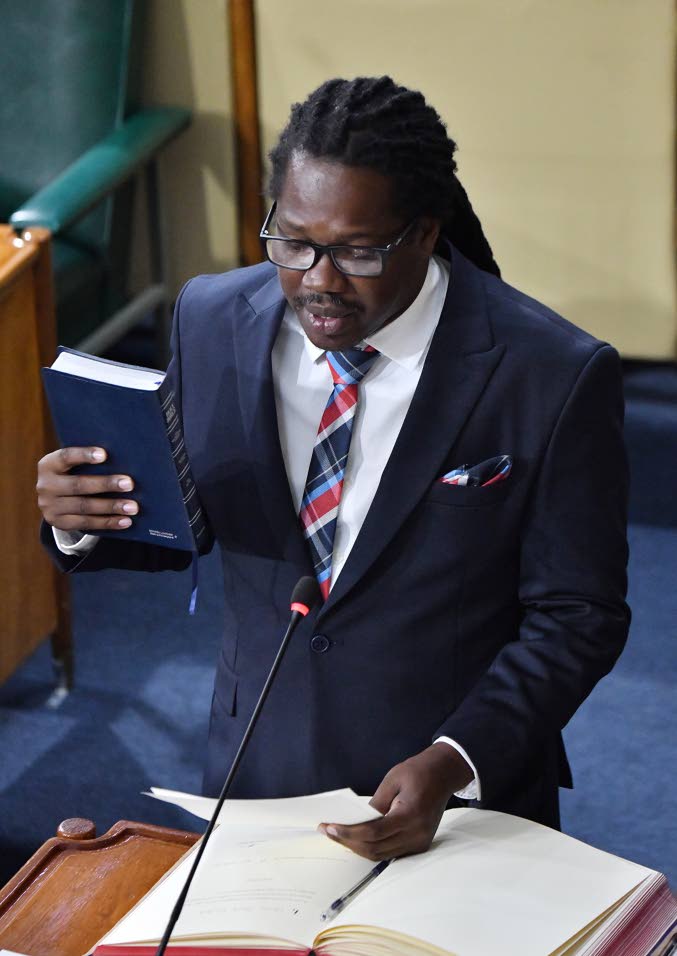
KINGSTON, Jamaica — In a significant parliamentary development, Damion Crawford, a prominent Member of Parliament from the People’s National Party (PP), has voluntarily stepped down from his position on the Public Administration and Appropriation Committee (PAAC). The decision was formally announced during Thursday’s ceremonial opening of Parliament, where Crawford provided detailed explanations for his departure.
Crawford emphasized that his resignation was entirely self-motivated and not the result of external pressure from party leadership. He expressed fundamental disagreements with the operational framework and organizational structure of the committee, stating, “My disagreement with the committee’s organizational approach would inevitably lead to significant inefficiencies if allowed to persist.”
The parliamentarian further elaborated on his philosophical stance, employing a carefully crafted metaphor to express his concerns about treatment standards. While not naming specific individuals, Crawford advocated for individuals from lower-income backgrounds and grassroots communities to maintain self-respect and avoid being marginalized by ambitious political maneuvers.
Addressing speculation about internal party conflicts, Crawford acknowledged differing perspectives with fellow PNP MP Peter Bunting regarding committee management but firmly denied any personal dispute. “Comrade Bunting and I collaborated effectively in the Senate previously. Our current divergence stems solely from differing operational philosophies regarding this specific committee’s management,” Crawford clarified.
In a revealing segment of his address, Crawford openly discussed his long-term political aspirations, confirming his ambition to eventually lead the party while reaffirming his commitment to party stability. “I’ve never concealed my hope to someday become the principal decision-maker. This organization represents ideological alignment rather than social camaraderie,” he stated pragmatically.
Crawford concluded with a strategic perspective on party timelines, noting, “According to our revised party regulations, the next leadership election occurs in 2027, making any destabilizing actions politically imprudent for the forthcoming two-year period.”