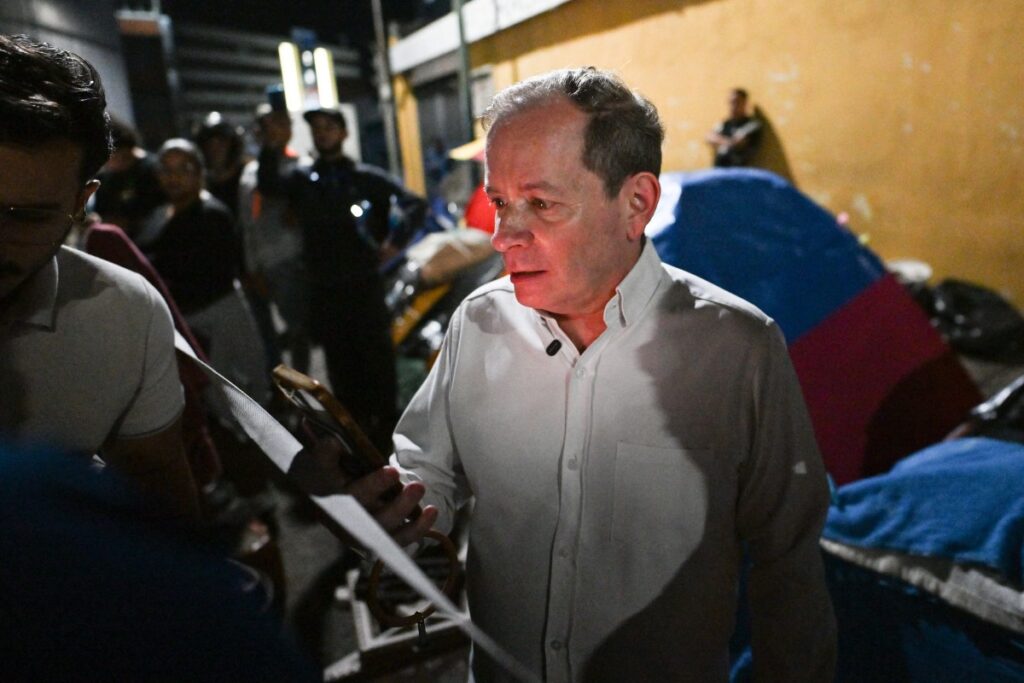
CARACAS, Venezuela — A prominent Venezuelan opposition leader found his fleeting freedom abruptly terminated Monday when state security forces detained Juan Pablo Guanipa, a key ally of Nobel peace laureate Maria Corina Machado. The incident occurred mere hours after Guanipa’s release from prison as part of a broader political prisoner amnesty initiative.
According to Machado, a contingent of heavily armed plainclothes operatives intercepted Guanipa in Caracas’ Los Chorros district in what she characterized as a ‘kidnapping.’ The Venezuelan Public Prosecutor’s Office subsequently confirmed the detention, alleging Guanipa had violated terms of his conditional release and would be transferred to house arrest, though specific details of the alleged violations remained undisclosed.
The development delivered a sobering message to pro-democracy advocates anticipating political transformation following the ouster of former president Nicolas Maduro. Guanipa’s son, Ramon Guanipa, publicly demanded verification of his father’s safety and whereabouts, asserting no release conditions had been breached.
The political confrontation intensified as Interior Minister Diosdado Cabello—a remaining figure from Maduro’s administration—attributed Guanipa’s predicament to opposition ‘stupidity,’ claiming the politician had provoked unrest. This contradicted Machado’s assessment that the detention undermined governmental commitments to end systematic repression.
Despite the setback, Machado reaffirmed her determination to return to Venezuela from U.S. exile, stating the incident reinforced rather than diminished her resolve.
Guanipa’s brief interlude of liberty Sunday included meetings with families of political detainees and bold challenges to authorities regarding electoral integrity. He had urged recognition of the disputed 2024 presidential election results or initiation of new democratic processes.
Initially arrested in May 2025 on charges widely condemned as politically motivated—including terrorism and money laundering—Guanipa’s renewed detention coincided with postponed parliamentary deliberations on the ‘Amnesty Law for Democratic Coexistence.’ This legislation, championed by interim president Delcy Rodriguez, promised broader prisoner releases and political reconciliation.
While Rodriguez’s administration has facilitated nearly 400 prisoner releases and engaged in tentative cooperation with Washington—including offers of oil concessions—reforms have progressed incrementally. Significant elements of the military-backed establishment persist, with Rodriguez herself having served as Maduro’s vice president.
Human rights organizations estimate approximately 700 political prisoners remain incarcerated. The situation attracted immediate international attention, with U.S. Congresswoman Maria Elvira Salazar warning of ‘grave consequences’ should Guanipa be harmed, emphasizing continued American scrutiny of Venezuelan developments.
The contrasting narratives of progress and repression were embodied in weekend celebrations surrounding prisoner releases, including emotional reunions at Tocuyito prison where freed detainee Albany Colmenares proclaimed hopeful expectations for Venezuela’s future amid ongoing struggles for democratic normalization.