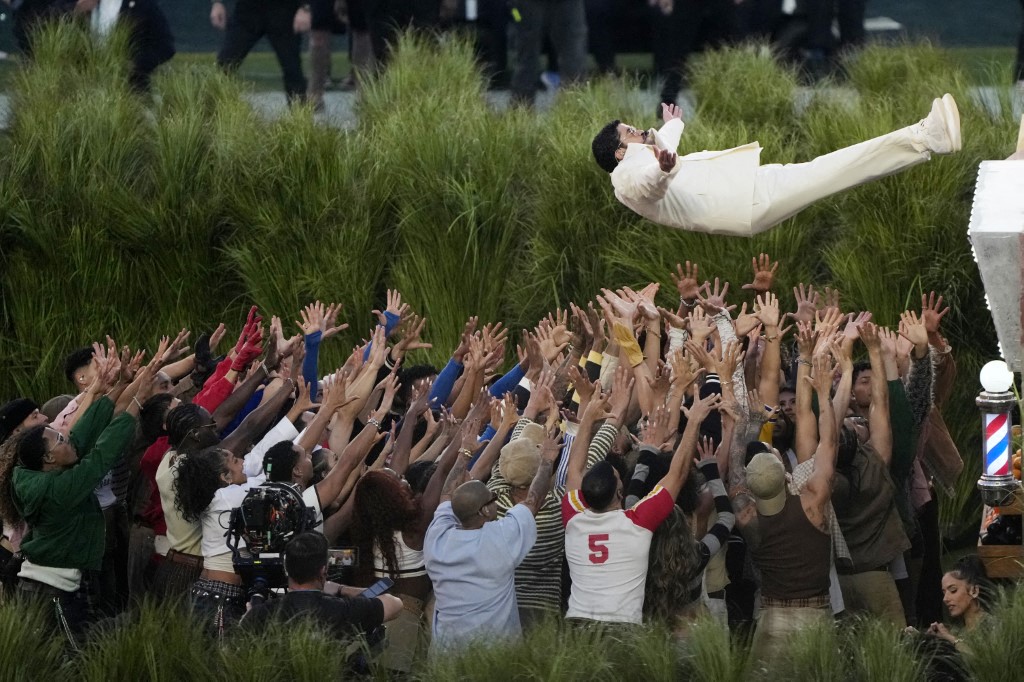
The small Puerto Rican municipality of Vega Baja erupted in collective pride as its most famous native son, global superstar Bad Bunny, took the stage during the Super Bowl LX halftime show. In the town square, approximately 100 residents gathered with beach chairs and drinks, creating a festive atmosphere that overshadowed the football game itself.
For 75-year-old retired teacher Madeline Miranda, the moment carried special significance—she remembered Benito Antonio Martínez Ocasio as her former student long before his astronomical rise to fame. “I danced, I screamed, I swore, and I gave it my all,” Miranda expressed, capturing the emotional intensity shared by attendees spanning multiple generations.
The artist’s performance marked several historic milestones: he became the first Super Bowl headliner to perform entirely in Spanish, just one week after winning the Grammy for Album of the Year with a Spanish-language work. His set design prominently featured cultural symbols including sugar cane fields and his salmon-colored “La Casita,” while his song selection celebrated Puerto Rican identity.
David Fontanez, a 66-year-old retiree, articulated the prevailing sentiment: “I feel so proud that someone from Vega Baja has reached such heights. This shows that our presence is growing stronger in the United States and around the world.”
Despite some conservative backlash regarding the Spanish-language performance—including criticism from former President Donald Trump—local residents emphasized the importance of cultural representation. The performance resonated beyond Puerto Rico, with online reactions from across the Caribbean and Americas expressing delight at the recognition. Bad Bunny concluded his set by holding up a football inscribed with “We are all America,” delivering a powerful message of inclusion.
The artist’s commitment to his homeland extends beyond symbolic gestures; his wildly successful concert residency in San Juan last year provided significant economic benefits to the island. For 14-year-old Pedro Melendez Barrio, Bad Bunny serves as both inspiration and proof that “if he has achieved all this, I can achieve this too.”