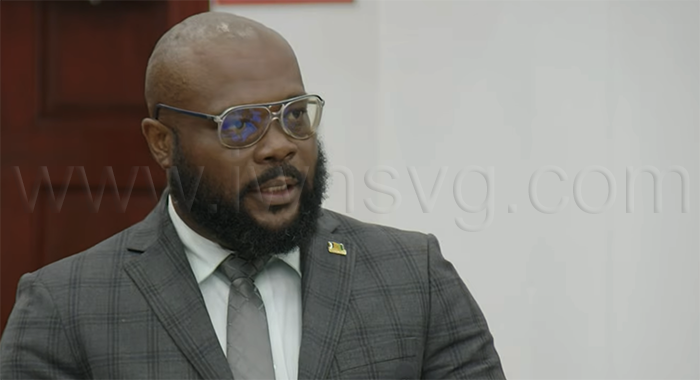
The New Democratic Party (NDP) administration in St. Vincent and the Grenadines is implementing its campaign pledge to prioritize youth advancement through substantial budgetary allocations and strategic ministerial restructuring. Under the leadership of Youth Minister Kaschaka Cupid, the government has designated approximately 55% of its 2026 budget—equivalent to EC$7.08 million—specifically for youth development programs.
Minister Cupid articulated the administration’s vision during parliamentary debates on the 2026 Estimates of Revenue and Expenditure, emphasizing a strategic reorientation toward what he termed the ‘orange economy’—encompassing cultural and creative industries. The ministry itself has been transformed from its previous incarnation as the Ministry of Housing, Informal Human Settlement, Youth and Sports to the newly branded Ministry of Youth, Sports, Culture and Creative Industries.
Financial analysis reveals significant shifts in budgetary priorities: while policy planning and administration experienced a 19% reduction (decreasing from EC$808,000 to EC$652,889), youth development funding increased by 2.68% compared to 2005 allocations. The sports sector received a modest 0.65% boost to EC$2,031,915, while culture and creative industries saw a more substantial 3.8% increase, now standing at EC$2,550,308.
The ministry’s overall recurrent expenditure demonstrates considerable growth, rising by 26.2% from EC$10.2 million in 2025 to EC$12.9 million in 2026. Minister Cupid outlined specific percentage allocations across divisions: 54.9% for youth development, 15.76% for physical education and sports, 20.4% for culture and creative industries, and 3.8% dedicated to the Windward Island School Games.
A cornerstone of the new cultural initiative includes establishing a national cultural calendar and preserving cultural heritage to enhance community engagement. The minister articulated the ministry’s comprehensive mission: to implement progressive policies empowering youth, harness sports for national unity, celebrate cultural heritage, and expand creative industries as pathways to innovation, employment, and global competitiveness—all contributing to sustainable national development.