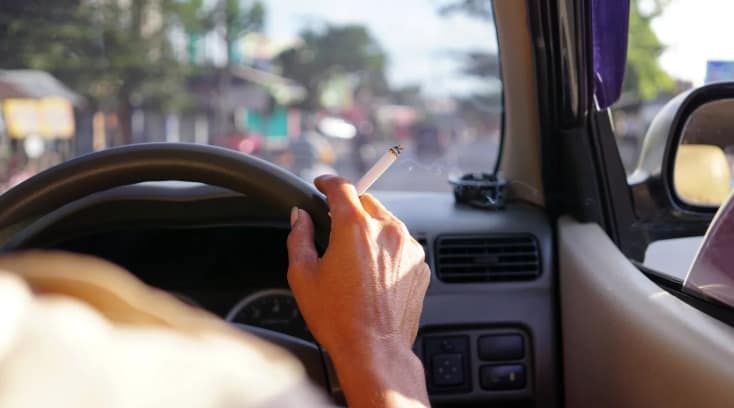
A disturbing trend of cannabis-impaired driving has emerged as a critical public safety threat across Antigua and Barbuda, prompting urgent calls for intervention from authorities and community stakeholders. This concerning behavior, locally termed ‘spliff and drive,’ has transitioned from roadside activity to moving vehicles, creating hazardous conditions on the nation’s highways and urban thoroughfares.
Eyewitness accounts describe vehicles with interiors so saturated with cannabis smoke that visibility resembles foggy conditions, with drivers frequently operating steering wheels with one hand while holding lit marijuana joints in the other. These observations are not isolated occurrences but represent a pattern documented along the Queen Elizabeth Highway, Perry Bay Main Road, and numerous other locations across the island.
The core issue transcends debates about cannabis legalization, focusing instead on the fundamental danger of impaired operation of motor vehicles. Scientific evidence confirms that cannabis consumption significantly reduces reaction times, compromises judgment, and diminishes coordination skills—all critical competencies for safe driving. This impairment creates substantial risks not only for the drivers themselves but for all road users, including pedestrians, cyclists, and other motorists.
This development occurs within a broader context of existing road safety challenges, where speeding, reckless operation, and distracted driving already contribute to annual fatalities. The addition of drug-impaired driving to this dangerous mix represents a potential escalation of roadway tragedies that many citizens fear is inevitable without prompt countermeasures.
Community advocates emphasize that this situation demands a multifaceted response involving enhanced law enforcement protocols, updated public education campaigns specifically addressing drug-impaired driving, and potential policy reviews regarding cannabis regulation. The concern extends beyond mere enforcement to addressing the cultural normalization of this dangerous behavior, particularly among younger demographics.
The ongoing situation presents policymakers with complex challenges regarding cannabis decriminalization while maintaining road safety standards. Many citizens are now questioning whether current regulations sufficiently address the public safety implications of cannabis use in operating environments, urging authorities to implement preventive measures before tragic consequences force reactive responses.