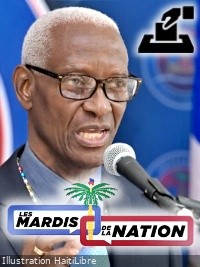
In a significant address during the 35th edition of the Mardis de la Nation on February 3rd, 2026, Minister Delegate Joseph André Gracien Jean reaffirmed the Haitian government’s steadfast dedication to advancing the nation’s electoral process. Speaking from the Prime Minister’s office, the official overseeing electoral and constitutional matters outlined comprehensive measures demonstrating institutional commitment to democratic renewal.
The government’s strategy centers on a modernized electoral framework, evidenced by a substantially revised Electoral Decree comprising 414 articles across 70 pages. This legislative foundation enables three transformative initiatives: decentralization of the Tabulation Center, implementation of diaspora voting mechanisms, and enhanced participation of women in electoral processes. A complementary electoral calendar provides the temporal architecture for these democratic exercises.
International cooperation forms another pillar of Haiti’s electoral preparations, with recent signing of a Memorandum of Understanding between Haiti’s Provisional Electoral Council (CEP) and Mexico’s National Electoral Institute (INE). This bilateral agreement facilitates knowledge transfer and technical collaboration.
Domestically, the Ministry of Justice has initiated a substantial capacity-building program, engaging 1,770 members across 240 political organizations. This initiative precedes upcoming registration processes for political parties and systematic updating of the electoral register.
Financially, the state has allocated approximately $83 million specifically for the 2025 electoral process, focusing on technical modernization and general election organization. Current available balances stand at $41.6 million, administered by a tripartite steering committee comprising the CEP President, Minister of Planning, and United Nations Development Programme representative, ensuring transparent fiscal oversight.