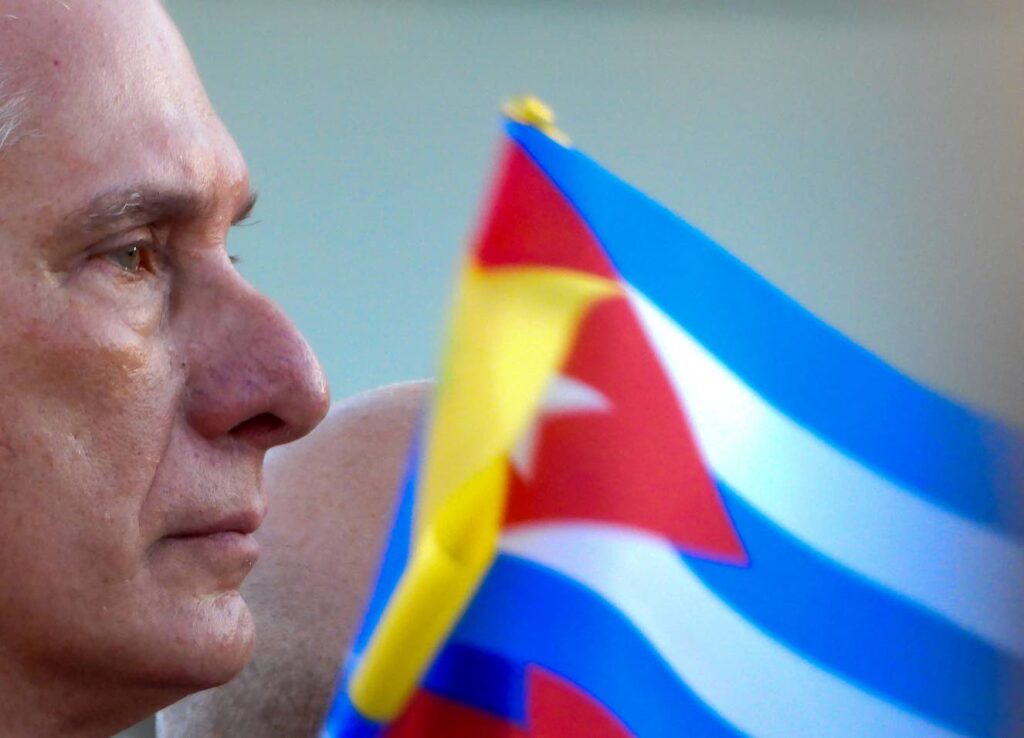
HAVANA, Cuba — In a firm national address broadcast on state media Thursday, Cuban President Miguel Diaz-Canel declared his nation’s readiness to engage in diplomatic talks with the United States, but strictly on condition of mutual respect and without external pressure. This statement comes as a direct response to recent threats from US President Donald Trump, who has aggressively threatened to sever Cuba’s oil access and predicted the collapse of its communist government.
President Diaz-Canel emphasized that any potential dialogue must be conducted between equals, respecting Cuba’s sovereignty, independence, and right to self-determination without interference in its internal affairs. This position directly counters Trump’s public urgings for Havana to ‘make a deal before it is too late’—a proposition the Cuban government maintains does not constitute genuine negotiation.
The escalating tension occurs against a backdrop of severe economic and energy distress in Cuba. The nation, already grappling with its worst economic crisis in decades, faces acute fuel shortages that have crippled power generation. An electrical grid failure earlier Thursday left hundreds of thousands in eastern Cuba without electricity for hours, highlighting the vulnerability of its infrastructure.
This crisis has been exacerbated by the US’s recent actions in Venezuela, Cuba’s primary historical oil supplier. Following a US military operation that ousted Venezuelan leadership, Trump claimed control over the nation’s oil reserves and vowed to starve Cuba of fuel, threatening tariffs on any third country attempting to supply the sanctioned island.
While the White House, through spokeswoman Karoline Leavitt, asserted that diplomacy is ongoing and that the Cuban government is ‘on its last leg,’ Havana continues to deny the existence of formal negotiations. International support appears limited; Mexican President Claudia Sheinbaum stated her country is pursuing diplomatic channels to resume oil shipments to Cuba but will not risk triggering punitive US tariffs.
President Diaz-Canel acknowledged the gravity of the fuel situation, noting that energy production from traditional generators has been ‘zero for weeks,’ but insisted that ‘Cuba is not alone.’ He pointed to the current pressure as validation of Cuba’s efforts to transition toward renewable energy and reduce foreign dependence. While Cuban officials squarely blame decades of US sanctions for the crisis, independent observers also cite poor economic management and a pandemic-induced tourism collapse as contributing factors to the nation’s dire situation.