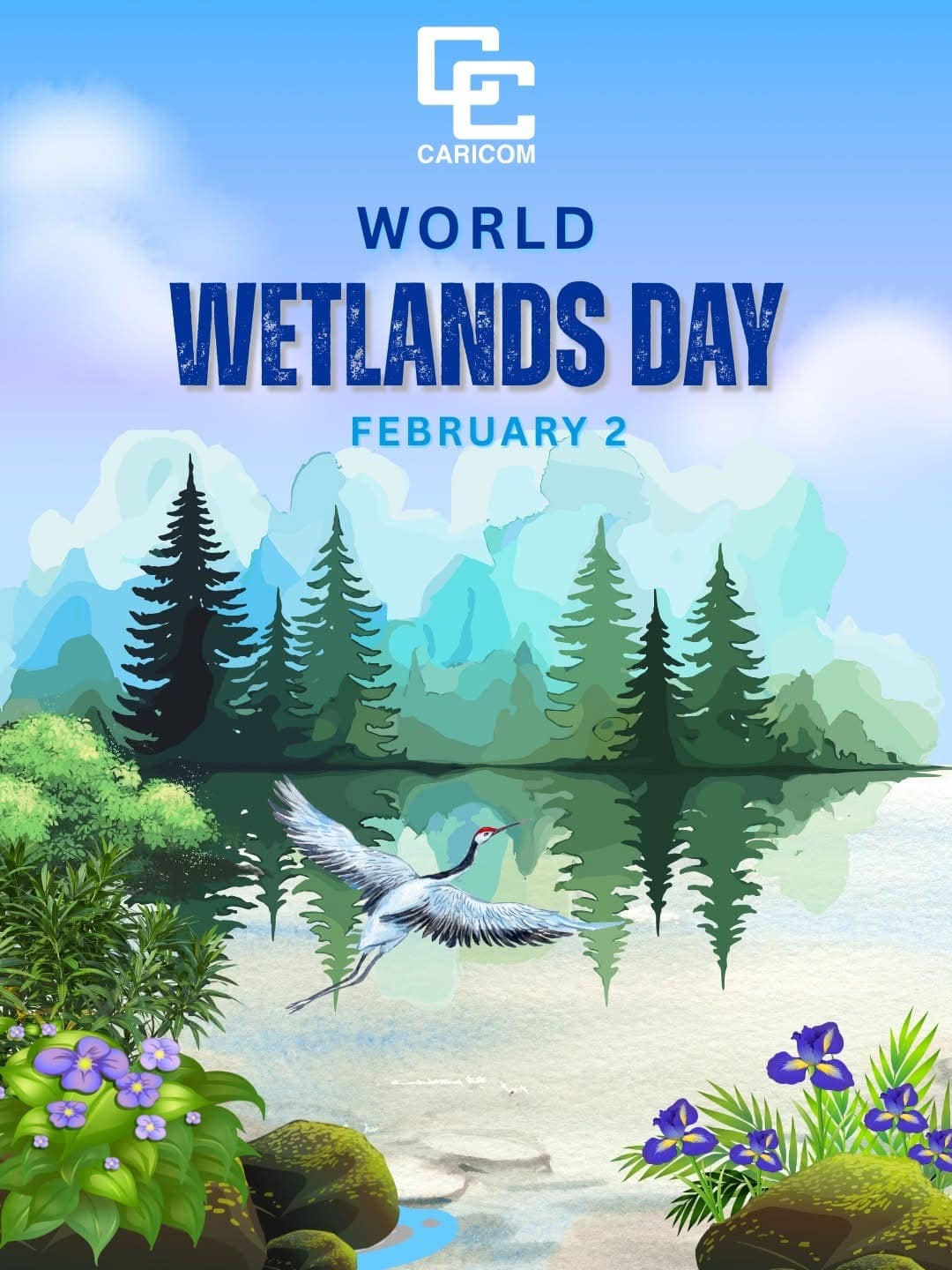
ST. JOHN’S, Antigua – The Caribbean Community (CARICOM) marked World Wetlands Day 2026 by emphasizing the ecological significance of Antigua and Barbuda’s Codrington Lagoon, recognized as a wetland of international importance under the Ramsar Convention. This designation places the lagoon among 16 protected Ramsar Sites throughout the Caribbean region.
The annual observance, celebrated globally on February 2nd, carried the thematic focus ‘Wetlands and Traditional Knowledge: Celebrating Cultural Heritage.’ CARICOM’s official statement underscored the vital functions wetlands serve in maintaining biodiversity, enhancing climate resilience, ensuring food security, and providing coastal protection. These ecosystems create essential habitats for marine and avian species while simultaneously supporting sustainable development and local livelihoods.
Beyond Codrington Lagoon—Antigua and Barbuda’s sole Ramsar-listed site—CARICOM highlighted multiple protected wetlands across member states. These include Inagua National Park in The Bahamas, Graeme Hall Swamp in Barbados, Crooked Tree Wildlife Sanctuary and Sarstoon Temash National Park in Belize, Levera Wetland in Grenada, and various wetland systems in Jamaica. Saint Lucia’s Mankòtè Mangrove and Savannes Bay, Suriname’s Coppenamemonding Nature Reserve, and several wetland complexes in Trinidad and Tobago complete the regional network of conserved areas.
CARICOM reiterated its urgent call for enhanced protection, restoration, and sustainable management practices to preserve these critical ecosystems for current and future generations. The organization’s advocacy aligns with global efforts to raise awareness about wetland conservation challenges and opportunities.