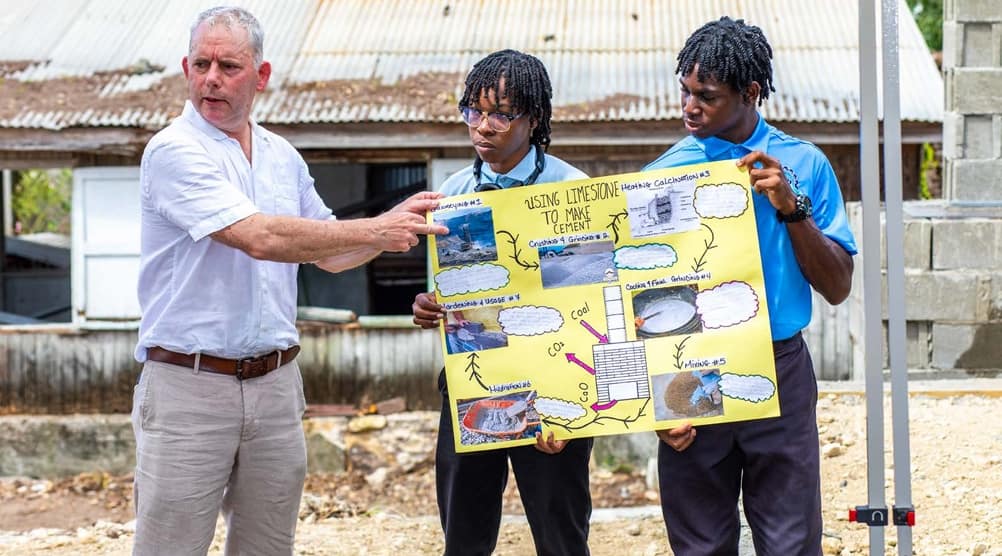
Antigua and Barbuda has inaugurated a newly constructed limestone kiln at the Harrison Centre, marking a significant advancement in the preservation of the nation’s architectural heritage. This facility will produce authentic lime mortar specifically designed for the restoration of historical structures throughout the dual-island nation.
The project represents a collaborative effort between multiple entities, including Antigua and Barbuda’s Ministry of Education, the Culture, Youth and Sports Division, the National Parks Authority, and the UK-based Centre for the Study of the Legacies of British Slavery. This partnership aims to resurrect traditional construction methodologies that predate the widespread adoption of modern cement.
Technical specifications reveal the kiln measures 48 inches square with a production capacity of approximately 10 feet of lime per firing cycle. The resulting lime mortar offers superior preservation qualities compared to contemporary cement, as it permits historical masonry to naturally regulate moisture through breathability—a critical factor in maintaining structural integrity over time.
Beyond material production, the initiative serves as an educational platform for skill development. Officials emphasize the kiln’s role in training both students and craftsmen in specialized heritage techniques, including conservation, masonry, and restoration practices. This knowledge transfer addresses a critical gap in the local heritage sector, where the unavailability of appropriate materials has previously compelled restoration teams to compromise with modern alternatives.
Project organizers highlighted during the launch ceremony that this facility not only bridges a technological void but also safeguards traditional knowledge while equipping the younger generation with valuable expertise in heritage conservation.