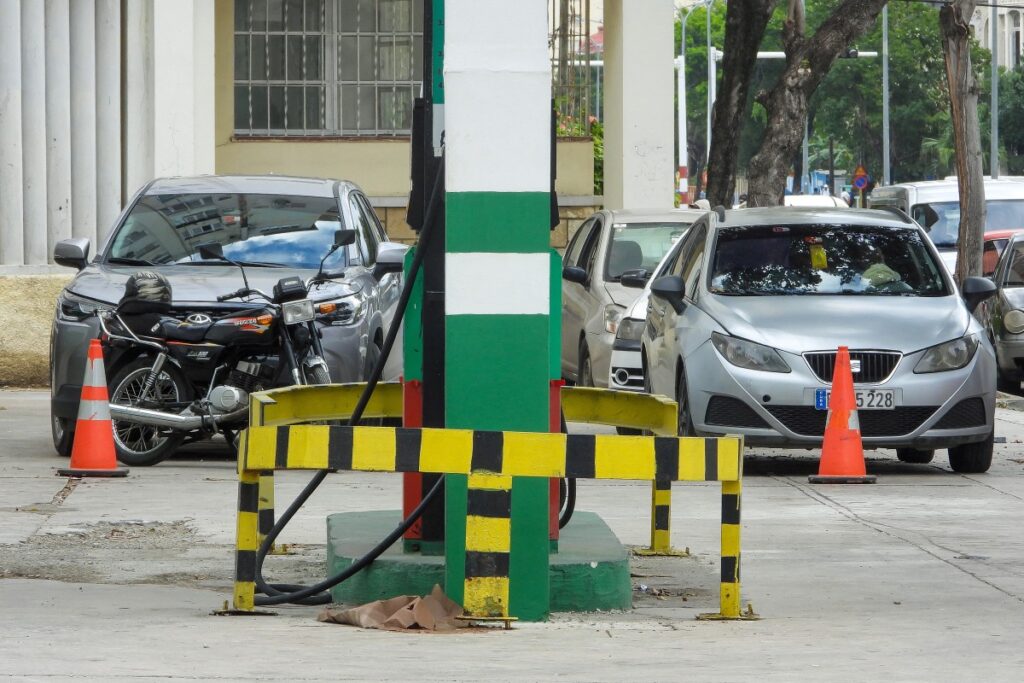
HAVANA, Cuba – Long queues formed at gasoline stations across the Cuban capital Friday as citizens confronted an escalating fuel shortage following President Donald Trump’s executive order imposing punitive tariffs on nations supplying oil to the island nation. The move has been characterized by Cuban authorities as an economic stranglehold designed to destabilize the country.
The directive, which effectively forces international partners to choose between trading with the United States or Cuba, arrives amid the Caribbean nation’s most severe economic crisis since the Soviet Union’s collapse in 1991. Current conditions include power blackouts extending up to 20 hours daily and critical shortages of food, medicine, and essential supplies.
Cuban President Miguel Diaz-Canel condemned the measures as “fascist, criminal and genocidal” tactics employed by what he described as a US cabal intent on suffocating Cuba’s economy. The sentiment was echoed by citizens like Jorge Rodriguez, a 60-year-old IT specialist, who noted that ordinary Cubans would bear the brunt of these policies.
This development follows the complete cessation of Venezuelan oil shipments after US special forces deposed Nicolás Maduro’s government in January. According to analyzed official statistics, Cuba generated merely half of its required electricity in 2025.
The Trump administration, featuring several officials with strong ties to Florida politics including Secretary of State Marco Rubio, has openly advocated for regime change in Havana. Trump himself declared “NO MORE OIL OR MONEY FOR CUBA: ZERO!” while labeling the nation an “extraordinary threat” to US national security—a designation that raises concerns about potential military escalation.
Mexico faces particular complications as both a remaining oil supplier to Cuba and a nation deeply integrated with US trade networks. President Claudia Sheinbaum warned of impending humanitarian consequences while attempting to navigate the diplomatic challenge. Although China voiced opposition to the measures, neither it nor Cuba’s traditional allies have announced concrete support plans.
Diaz-Canel confirmed no ongoing negotiations with Washington, vowing that Cuban citizens stand “ready to defend the homeland to the last drop of blood.”