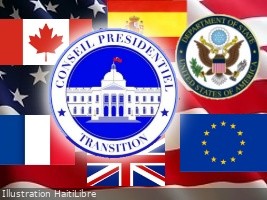
Haiti faces escalating political turmoil as the Presidential Transitional Council (CPT) has defiantly moved to dismiss Prime Minister Alix Didier Fils-Aimé, directly challenging pressure from the United States and other international partners. This controversial decision has triggered a significant diplomatic confrontation just weeks before the Council’s mandate expiration on February 7, 2026.
The dismissal process encountered internal resistance from Laurent Saint-Cyr, the Council’s President pro tempore and Coordinator, who has blocked the resolution’s implementation. Saint-Cyr formally opposed what he characterized as “any resolution aimed at undermining governmental stability as February 7th approaches” in official correspondence to CPT members.
The political drama intensified with the fluctuating position of Presidential Advisor Smith Augustin, who initially withdrew his signature from the dismissal resolution on January 21st, only to reverse course the following day and confirm his support for the Prime Minister’s ouster via WhatsApp message.
International reaction has been swift and severe. The U.S. Embassy declared any government composition change by the non-elected CPT “null and void,” warning that supporters of such “disruptive steps” would be considered as “favoring the gangs” and acting against Haitian and international interests.
The U.S. State Department’s Western Hemisphere Office delivered particularly harsh criticism, asserting that Haiti’s chronic instability stems from “corrupt Haitian politicians who use gangs and other armed groups to create chaos.” The statement explicitly labeled CPT members following this path as “criminals like the gangs they conspire with” rather than Haitian patriots.
Canada expressed deep concern that replacing the Prime Minister would “weaken the stability and security of the country,” while the European Union, Germany, Spain, and France jointly warned that any leadership change would “jeopardize the encouraging momentum of the security forces against criminal gangs.”
The United Kingdom similarly characterized the proposed government changes as “inopportune and destabilizing,” emphasizing that such moves would undermine security efforts precisely as the CPT’s mandate approaches expiration.
This developing crisis represents a critical test for Haiti’s transitional governance amid ongoing security challenges and gang violence, with the international community presenting a united front against the CPT’s actions.