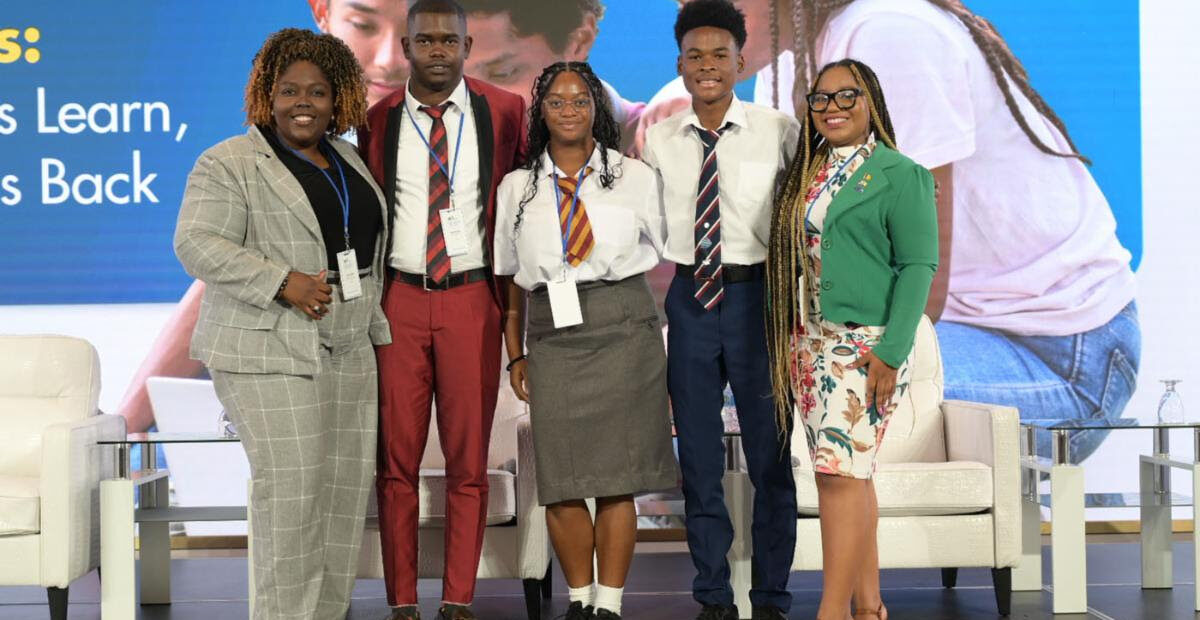
Young voices across the Caribbean are driving a transformative educational agenda, presenting actionable strategies to reshape learning systems region-wide. Their insights, prominently featured during the Caribbean Development Bank’s (CDB) 2025 Regional Symposium and Policy Dialogue on Transforming Education in Barbados, align with UNESCO’s 2026 International Day of Education theme emphasizing youth’s role in co-creating education.
The youth-led proposal centers on three fundamental pillars: technological innovation, mandatory vocational training, and enhanced collaborative ecosystems. Students advocate for a comprehensive digital overhaul in classrooms, leveraging tools like tablets and Google Classroom to promote inclusivity and interactive learning. Naomi Jordan, a visually impaired student and First Vice President of the Barbados National Student Council, emphasized technology’s role in accessibility: ‘Digital tools allow me to engage with lessons interactively, correct mistakes easily, and participate fully alongside my peers.’
Despite acknowledging technology’s benefits, students identified a significant generational divide hindering progress. Many parents and educators lack familiarity with digital learning platforms, resulting in overly restrictive policies. To address this, they propose targeted digital literacy programs for adults to foster safer and more effective technology integration.
Beyond digital transformation, youth representatives stressed the critical need for practical skill development. They called for the compulsory inclusion of Technical and Vocational Education and Training (TVET) in national curricula, arguing that hands-on learning remains severely underrepresented. Rondelle Nedd, Operations Coordinator at Guyana’s Ministry of Legal Affairs, noted: ‘Skills are wealth, yet TVET is not widely mandatory across the Caribbean. Ensuring it is part of the curriculum would provide practical opportunities for student success.’
The symposium also highlighted findings from a 2025 regional consultation revealing that emotional support, open communication, and community engagement form essential foundations for educational achievement. Students emphasized that consistent emotional backing builds confidence and resilience, while non-judgmental dialogue empowers learners. They further advocated for strengthened collaboration between families, schools, and communities through both physical and digital channels.
These recommendations, initially presented under the theme ‘Student and Youth Perspectives: What Helps Us Learn, What Holds Us Back,’ now gain renewed relevance as Caribbean nations seek to implement youth-driven solutions. The CDB initiative aims to incorporate these insights into policy development, creating stronger partnerships among educators, families, and policymakers to revolutionize Caribbean education systems.