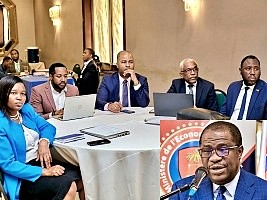
Port-au-Prince, Haiti – In a significant move toward fiscal modernization, Haiti’s Ministry of Economy and Finance convened a high-level technical meeting on January 20, 2026, to advance revisions to the nation’s Personal Income Tax (IRPP) structure. Minister Alfred Fils Metellus led the session alongside members of the Tax Policy Committee (CPF), engaging economists and chartered accountants in substantive dialogue regarding proposed changes to the tax scale.
The initiative represents a strategic effort to address systemic inefficiencies within Haiti’s current taxation framework. Ministry officials identified several critical areas for improvement, including the need to eliminate structural distortions and create a more equitable system aligned with contemporary economic realities. The revision process emphasizes technical precision while upholding fundamental taxation principles.
Minister Metellus highlighted the reform’s potential impact on small and medium enterprises (SMEs), identifying them as crucial engines for economic expansion and employment generation. “Our objective is to establish a fiscal environment that actively promotes SME development through thoughtful policy adjustments,” Metellus stated during the proceedings. He further committed to maintaining inclusive dialogue with private sector stakeholders throughout the reform process.
Technical discussions organized around four central pillars: equitable contribution according to economic capacity, systemic effectiveness promoting formal economic participation, simplified tax scale transparency, and overall structural coherence within Haiti’s tax architecture.
CPF President Andral Joseph outlined complementary initiatives including the ongoing revision of Haiti’s General Tax Code and planned modernization of tax administration systems. Directors Romel Troissou and Carl-Edwice Estima presented analytical frameworks detailing multiple revision scenarios, emphasizing three core objectives: restoring fiscal justice, protecting low-income households, and maintaining budgetary sustainability.
Prominent private sector representatives including economists Kesner Pharel and Duval Lucnaire contributed substantive assessments and recommendations. Their participatory engagement reflects a concerted effort to develop a taxation system characterized by enhanced fairness, operational transparency, and improved adaptation to Haiti’s distinctive economic conditions.