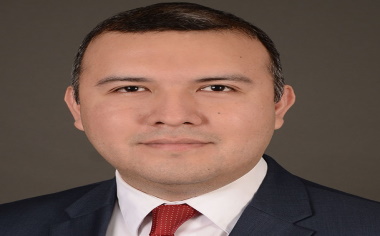
NEW YORK — The Commissioner of New York City’s Mayor’s Office of Immigrant Affairs (MOIA), Manuel Castro, has issued a strong condemnation of former President Donald Trump’s administration for terminating Temporary Protected Status (TPS) for Haitian nationals residing in the United States. The Department of Homeland Security (DHS) published an official notice in the Federal Register confirming the termination, set to take effect on February 3, 2026.
Castro characterized the move as a direct threat to the stability of tens of thousands of families across New York, warning of potential family separations and severe economic distress. He emphasized that TPS is a critical humanitarian provision enabling Haitian immigrants to reside and work legally in the U.S. amid persistently dangerous conditions in their home country. The Commissioner called on federal authorities to reverse the decision, redesignate TPS for Haiti, and issue clear guidance to allow affected families to plan their futures without fear.
Highlighting their substantial economic contributions, Castro noted that Haitian TPS holders inject over $3.4 billion annually into the U.S. economy. He praised the Haitian community in New York—one of the largest globally—as neighbors, entrepreneurs, caregivers, essential workers, and faith leaders who significantly enrich the city’s economic and cultural fabric.
In a similar vein, the Haitian Bridge Alliance (HBA), based in San Diego, California, denounced the termination as a deeply troubling policy. HBA Executive Director Guerline Jozef pointed to ongoing assessments confirming that Haiti remains critically unstable due to rampant gang violence, mass displacement, political chaos, and the breakdown of state institutions. She reported that over 90% of the capital, Port-au-Prince, is under gang control, and more than 1.4 million people have been displaced due to violence.
Jozef argued that ending TPS would immediately jeopardize the legal status of over 500,000 Haitian nationals, many of whom have built lives in the U.S. for more than ten years and are essential workers in sectors like healthcare, construction, and services. She condemned the decision as an ‘act of violence’ and ‘state-sponsored cruelty,’ noting that it would also severely impact millions in Haiti who rely on remittances from relatives abroad.
Both Castro and Jozef reaffirmed their commitment to advocating for the rights and protections of Haitian immigrants, urging a reversal of the termination and a renewed commitment to humanitarian principles.