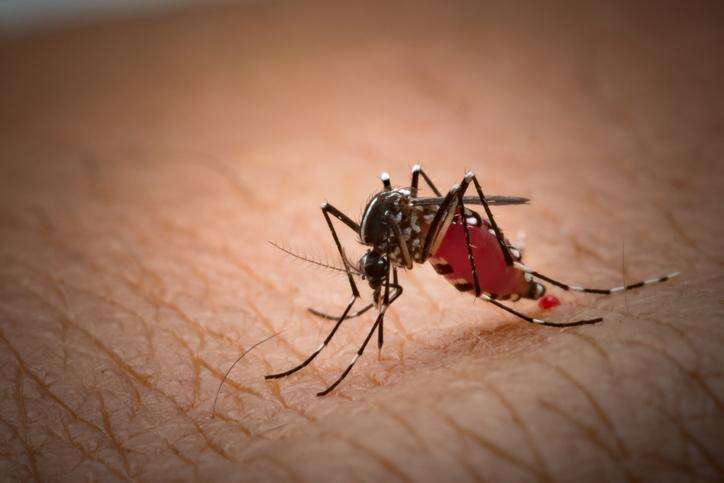
GEORGETOWN, Guyana – In a proactive response to a public health threat, Guyana’s Health Minister Dr. Frank Anthony has announced a nationwide alert for all medical facilities. The directive mandates heightened vigilance for patients presenting with severe body pains and fever, symptoms associated with the mosquito-borne chikungunya virus. This preventive measure follows confirmed reports of a chikungunya outbreak in the neighboring nation of Suriname.
Minister Anthony, addressing the media on Wednesday, expressed confidence in the robustness of Guyana’s existing surveillance mechanisms. He emphasized that the country’s health network is well-equipped to promptly detect and report any potential cases. ‘Our system is fairly robust; anything that comes in will be reported, and we will be able to detect that,’ he stated in an interview with Demerara Waves online news. ‘However, since a neighboring country reported cases, we are putting our health centers and hospitals on alert to ensure immediate detection should anything emerge.’
The alert in Suriname was triggered after its Ministry of Health confirmed eight autochthonous cases—meaning the infected individuals had not recently traveled abroad. The diagnoses were verified through testing at Suriname’s Central Laboratory of the Bureau for Public Health (BOG) and the Academic Hospital Paramaribo’s laboratory.
In Guyana, the standard protocol for febrile illnesses involves initial testing for dengue. If those results return negative, medical staff proceed to test for other influenza-like infections. Subsequently, serum samples are dispatched to the National Reference Laboratory for advanced Polymerase Chain Reaction (PCR) testing, which can identify diseases like chikungunya. Minister Anthony clarified that, based on weekly surveillance reports, no local cases have been detected thus far, noting only one imported case from a Caribbean island last October.
Complementing the clinical vigilance, the government is intensifying vector control efforts. The Health Ministry has trained personnel within neighborhood councils (NDCs), providing them with equipment and chemicals to conduct fogging operations. Each NDC is tasked with fogging within its community, a process monitored by the ministry. The Georgetown City Council operates its own fogging initiatives, with the health ministry conducting additional independent fogging campaigns.
This outbreak echoes the first major chikungunya emergence in Suriname in June 2014, which coincided with the virus’s widespread circulation throughout the Caribbean. The Suriname Health Ministry has issued public guidance, advising individuals experiencing fever and joint pain to use paracetamol instead of aspirin or ibuprofen, and to ensure ample fluid intake and rest. The ministry has pledged to continue providing transparent and timely updates as the situation evolves.