In a landmark achievement for environmental journalism, the Wild Tobago column has reached its 500th installment with a special expedition to Trinidad’s Icacos wetlands. This ongoing series, initiated in July 2016 by coral reef ecologist Dr. Anjani Ganase during her PhD studies in Australia, has evolved into a platform for scientific communication and environmental advocacy across Trinidad and Tobago.
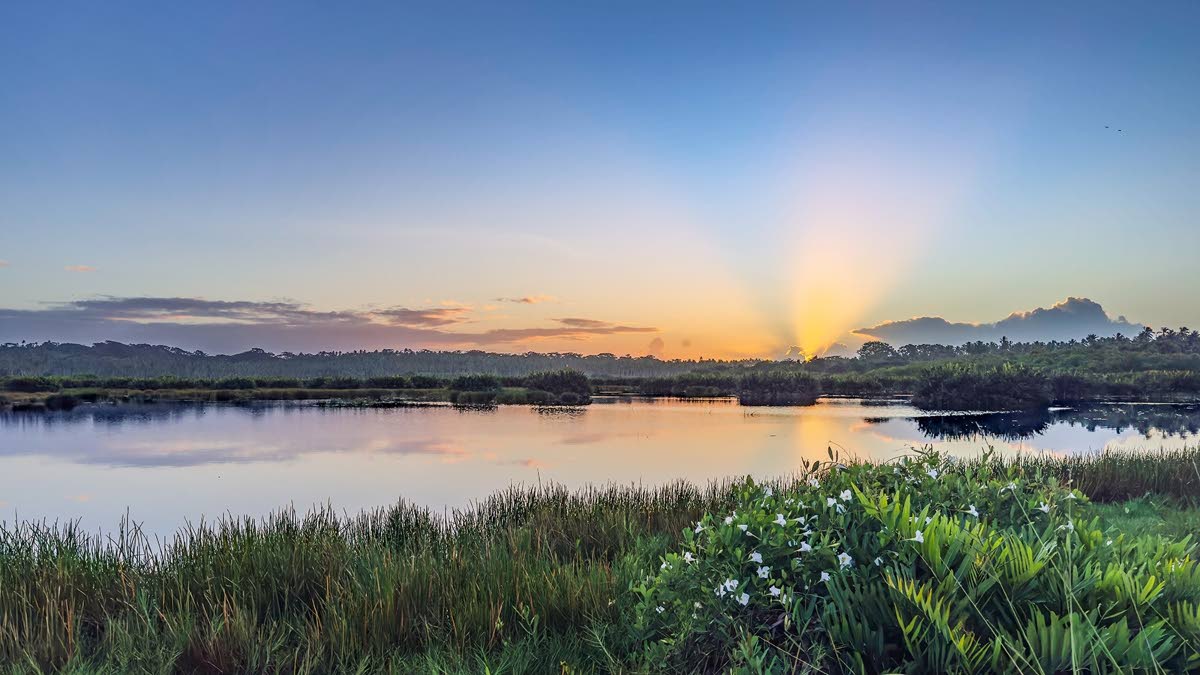
The commemorative feature brought together Dr. Ganase and acclaimed birder Faraaz Abdool for a pre-dawn journey to the southwestern tip of Trinidad. Their mission: to document the spectacular biodiversity of the Icacos wetlands at sunrise. The team witnessed an extraordinary natural performance as the sky transformed through shades of yellow, salmon, pink, and blue, while the wetland came alive with avian activity.
Abdool described the sensory experience: ‘As the first light touched the horizon, the dawn chorus began. Carib Grackles jostled for position in swamp ferns, yellow-hooded blackbirds gathered in smaller groups, and yellow-chinned spinetails created a rattling soundtrack.’ The experience turned dramatic when a large spectacled caiman emerged with deep bellows and rhythmic grunts, performing mating displays accompanied by ‘dancing water’ phenomena known as Faraday waves.
The team observed over 50 scarlet ibis whirling overhead, ospreys patiently waiting for prey, wattled jacanas foraging at water’s edge, and common gallinules taking clumsy flight. Despite signage declaring the area protected, the birds’ furtive behavior suggested ongoing human disturbance.
The expedition continued to Pointe-a-Pierre Wildfowl Trust, where conservation efforts have successfully reintroduced Muscovy ducks hunted to extinction on the islands. The trust represents a beacon of conservation education, complemented by the Freebird Restaurant offering world-class meals with local ingredients.
Dr. Ganase reflected on the column’s advocacy role, particularly in challenging government plans to develop the country’s only marine protected area for resort construction. She expressed concern about current threats to Mt Irvine Reef from hotel and housing development, noting that marine ecosystems already face climate change impacts while basic management measures remain unimplemented.
The feature concludes with an invitation to all citizens to undertake their own Wild Tobago journeys, emphasizing that appreciation and respect for natural spaces can foster greater community consciousness and care for both environment and fellow inhabitants.