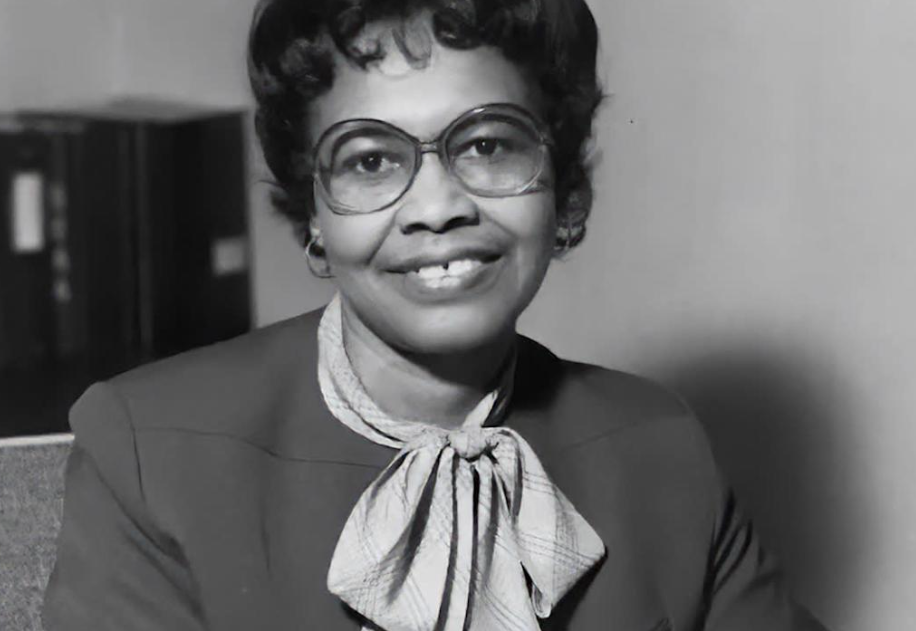
The scientific community mourns the passing of Dr. Gladys West, the brilliant mathematician whose foundational work enabled the development of global positioning systems (GPS), at age 95. While her name remained obscure beyond academic circles for most of her career, West’s computational innovations ultimately revolutionized countless aspects of contemporary life—from navigation and aviation to emergency response systems and global communications.
Born in 1930 in rural Virginia during the era of racial segregation, West demonstrated exceptional academic prowess from an early age. She earned both bachelor’s and master’s degrees in mathematics from Virginia State College (now Virginia State University) before joining the U.S. Navy’s research center in Dahlgren, Virginia, in 1956. She would dedicate the next 42 years of her professional life to what is now known as the Naval Surface Warfare Center.
Throughout the 1970s and 1980s, West pioneered sophisticated mathematical models that utilized satellite data to precisely calculate the Earth’s geoid shape. Her groundbreaking work in satellite geodesy provided the essential mathematical framework that would later become the cornerstone of GPS technology. Despite retiring in 1998 after over four decades of service, her contributions remained largely unrecognized—a pattern all too common for women and people of color in STEM fields.
Public recognition finally arrived in 2018 after West submitted a career summary for a sorority event, triggering widespread media coverage and institutional acknowledgments. These included her induction into the U.S. Air Force Space and Missile Pioneers Hall of Fame and the Female Alumna of the Year honor from the HBCU Awards. In a poignant 2020 interview with The Guardian, West revealed that despite her instrumental role in creating GPS technology, she personally favored paper maps during her travels—a testament to her generation’s traditions and her humble character.