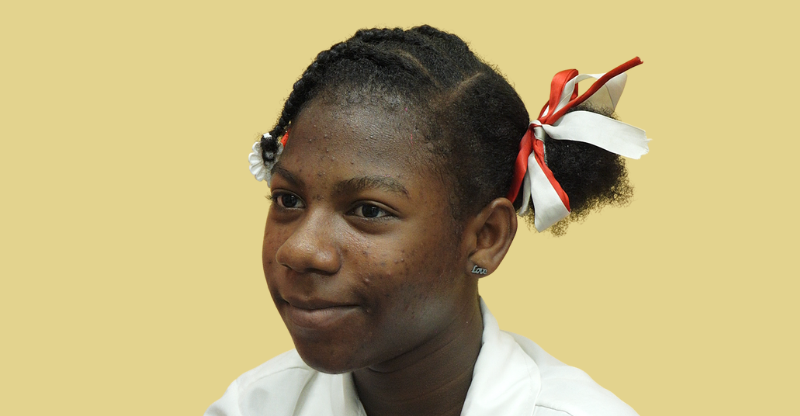
In 2024, Bella Emmanuel entered Castries Comprehensive Secondary School (CCSS) as a quiet, wheelchair-using student carrying both academic promise and physical challenges. Two years later, the 13-year-old has transformed into a confident, socially engaged scholar whose journey exemplifies how intentional inclusion policies can reshape educational experiences for students with disabilities.
Bella first gained national recognition through her outstanding performance on the 2024 Caribbean Primary Exit Assessment (CPEA), achieving an overall score of 79 across core subjects. This accomplishment secured her placement at CCSS, where school administrators have implemented concrete measures to ensure physical accessibility doesn’t limit educational opportunities.
The school’s infrastructure includes ramps and adaptive classroom arrangements. When Bella advanced to Form Two and encountered classrooms only accessible by stairs, administrators creatively reshuffled room assignments rather than restricting her subject options. “We rotate the classes to ensure students like Bella have access,” explained Vice Principal Anne Giffard Elcock. “A child is not banned from doing a subject because they have no access.”
Beyond physical accommodations, Bella has flourished through extracurricular engagement, particularly in the school choir where she has discovered confidence and self-expression. Her musical pursuits have extended beyond campus to regional competitions and showcases. “I’m in Red Cross, arts club, a lot of clubs, but the one I enjoy most is the choir,” Bella shared.
The school’s holistic approach includes approximately 25 students receiving additional support through special needs teachers and teaching assistants. According to Elcock, the program aims to “bridge learning gaps so students are not left behind” while focusing on “the holistic development of the child.”
Transportation challenges persist, with Bella relying on compassionate assistance from classmates and teachers who ensure her safe commute. Students gently lift her onto buses while folding her wheelchair for storage, demonstrating a community-driven support system.
Bella’s academic self-awareness remains sharp, as she acknowledges finding mathematics challenging while maintaining determination to improve. Socially, she has become “the life of the party” according to school staff, shedding earlier shyness to become fully integrated among peers.
Her journey from apprehensive newcomer to confident participant illustrates how educational institutions can transform lives through committed inclusion practices that extend beyond mere infrastructure to encompass academic, social, and logistical support systems.