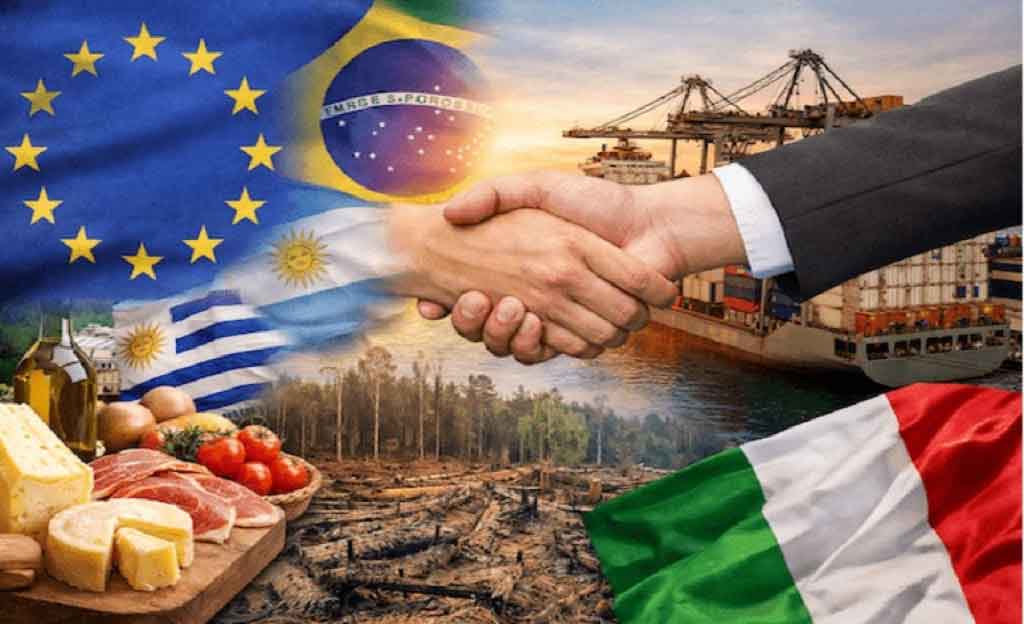
After more than a quarter-century of complex negotiations, the European Union and MERCOSUR trading bloc have finalized a landmark trade agreement in Paraguay’s capital that establishes the world’s most extensive free trade zone. The comprehensive pact, which requires ratification by both the European Parliament and individual national governments before implementation, promises to significantly reduce market access costs while enhancing the competitive positioning of Italian exports in South American markets.
Economic analysts project substantial growth in trade volumes and export opportunities for Italian businesses, with particular advantages anticipated for small and medium-sized enterprises and the premium agricultural food sector. The agreement strategically positions Italian products within a market encompassing approximately 800 million consumers across 27 EU nations and MERCOSUR member states including Argentina, Brazil, Uruguay, Paraguay, and Bolivia, though Venezuela remains suspended from participation since 2017.
Italian Foreign Minister Antonio Tajani emphasized the agreement’s geopolitical significance, noting its timing coincides with the Trump administration’s reintroduction of protective tariffs targeting EU exports and other major markets. This trade alliance represents a strategic countermeasure to growing protectionist tendencies in global trade relations, creating alternative economic partnerships that bypass restrictive tariff barriers.
The accord establishes unprecedented market access provisions while maintaining quality standards for specialized products, potentially revolutionizing trade flows between the European and South American continents. The creation of this massive economic bloc marks a historic shift in global trade dynamics, offering new avenues for economic cooperation beyond traditional transatlantic partnerships.