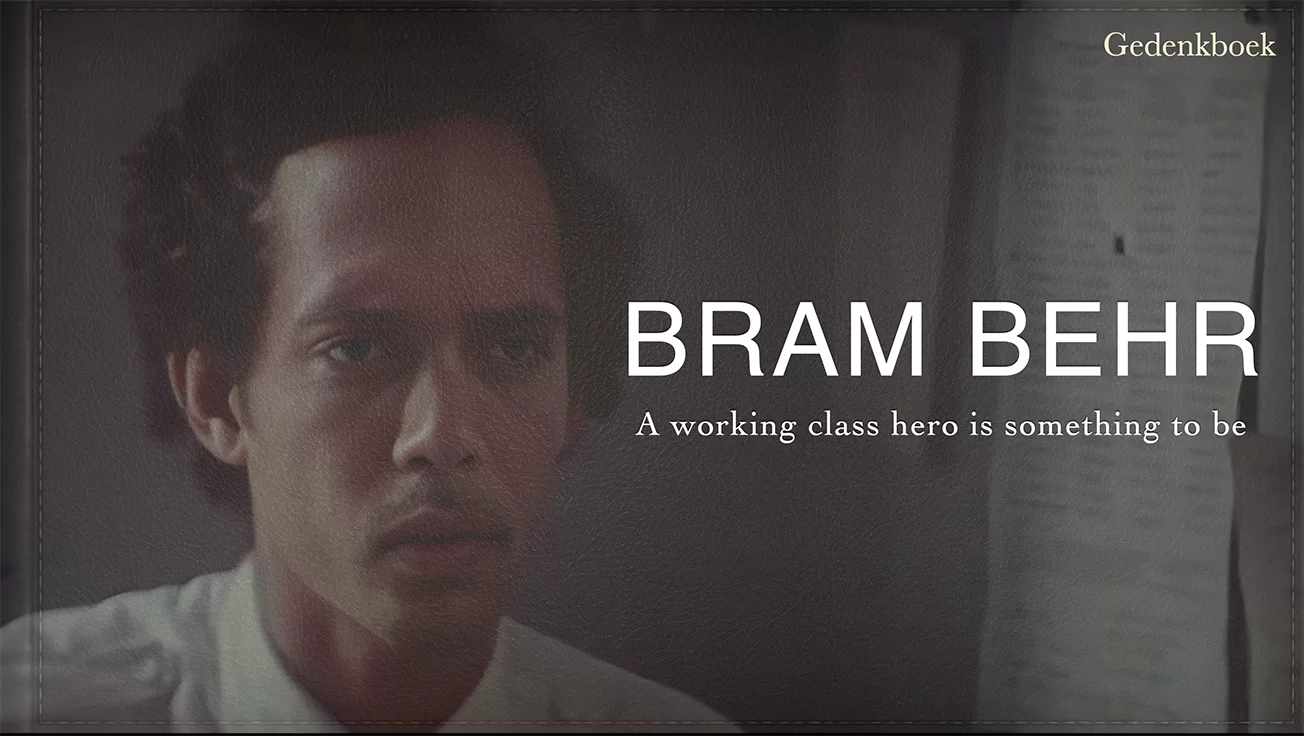
A poignant tribute unfolded as Henry Does presented the first copies of the memorial publication “BRAM BEHR – A Working Class Hero Is Something to Be” to the children of the late Surinamese activist on what would have been his 75th birthday. The commemorative work emerged from a deeply personal request by Vladi, Behr’s youngest son, who sought photographs of his father who was tragically executed at age 31 during Suriname’s December Murders of 1982.
The publication’s title draws inspiration from contributor Wim Bakker’s recollection of their 1970s collaboration producing the progressive publication Rode Surinamer. Bakker reveals how John Lennon’s “Working Class Hero” became their anthem, with its resonant chorus line ultimately providing the volume’s thematic foundation. “We had no idea then that this song was about him,” Bakker reflects.
Ronald Snijders contributes musical memories of Behr’s dedication as first violinist in the Volksmuziekschool Youth Orchestra, where his exceptional talent rapidly elevated him to concertmaster position. Snijders expresses profound shock at Behr’s eventual fate, noting that while the activist fiercely opposed injustice, he never employed physical violence.
The work contains particularly moving historical documentation, including Rita Rahman’s account of the journalistic solidarity between Behr and Leslie Rahman (another December Murders victim). She reproduces Behr’s heartbreaking April 25, 1982 letter to his nine-year-old son Raoul, written during imprisonment: “Those naughty soldiers put me in a dark cell for eight days, just like a thief. It wasn’t pleasant, but every day I thought of you. And of all the children outside who are hungry and poor.”
Personal testimonies continue with Marjan Markelo’s remembrance of Behr as her mathematics teacher in Moengo, describing his transformative pedagogical approach that encouraged critical inquiry and looking beyond surface appearances. Former AMS director and teacher Ronald Venetiaan contributes a powerful closing message urging Behr’s descendants to preserve his positive militant spirit while contextualizing his communist ideals within Suriname’s complex political landscape.
The memorial volume features extensive photographic documentation alongside contributions from numerous intellectuals and activists, concluding with a solemn memorial page honoring all fifteen victims of the December 8, 1982 executions.