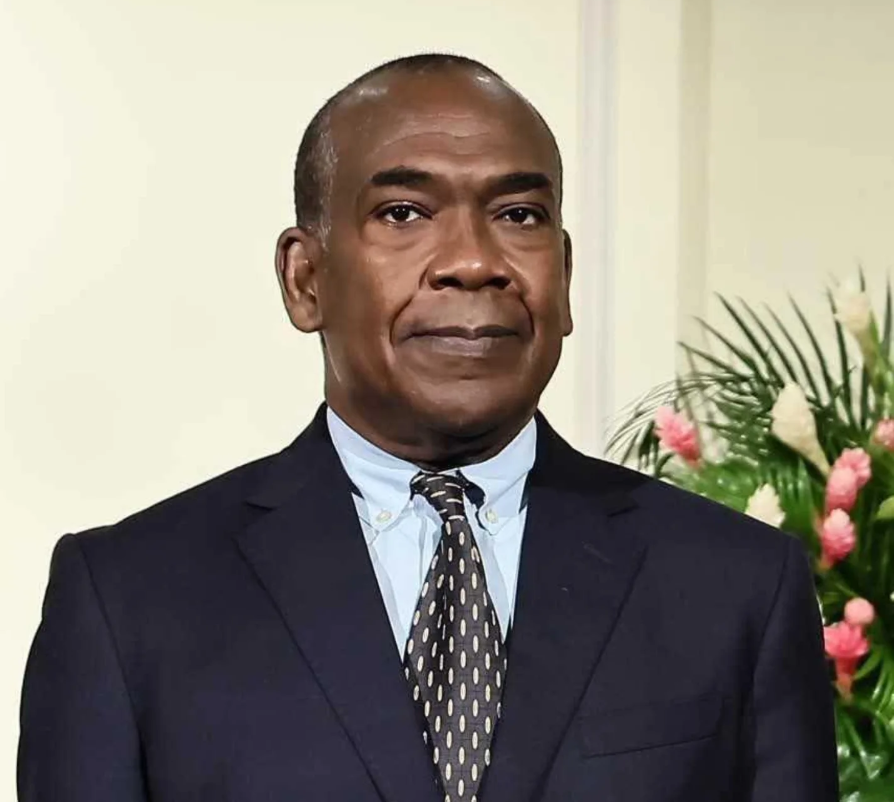
The Government of Trinidad and Tobago has declared an immediate end to all civil proceedings related to the collapsed CL Financial Group, terminating a decades-long investigation that consumed billions in public funds through extensive legal fees. Attorney General John Jeremie delivered a scathing statement to Parliament, characterizing the protracted probe as a judicial ‘feeding frenzy’ and a prolonged ‘joke’ of an investigation.
Jeremie revealed the state has expended an estimated TT$28 billion (US$4.48 billion) on the CL Financial rescue operation, with an additional TT$3-4 billion (US$480-640 million) dedicated specifically to litigation expenses. These figures exclude substantial payments to liquidators, bringing the total financial burden significantly higher.
The Attorney General presented the long-concealed Sir Anthony Colman report, which details the 2009 collapse of insurance giant Colonial Life Insurance Company (CLICO), a CL Financial subsidiary. The report, costing approximately TT$150 million (US$24 million) to produce, had never been previously disclosed to the public or Parliament despite its documentation of what Jeremie described as ‘the largest financial fraud in this country.’
Jeremie criticized his predecessors for authorizing payments approaching half a billion dollars to legal and accounting firms, including nearly TT$400 million (US$64 million) to Deloitte and Touche alone. He noted that despite the enormous expenditure, not a single individual has faced criminal charges related to the financial collapse, which he attributed to ‘unconscionable action’ by previous administrations.
The CL Financial collapse originated from excessive related-party transactions, high-risk investments, and plummeting asset values, culminating in a government bailout in January 2009. The Central Bank of Trinidad and Tobago assumed control until December 2022, when CLICO finally repaid its TT$17.3 billion (US$2.77 billion) debt.
Jeremie highlighted the investigation’s inadequate resources, noting that just one to three police officers were assigned to examine evidence including tens of millions of emails, financial records, forensic analyses of cross-border transactions, 6,414 electronic evidence pieces, and 1,650 boxes of physical documentation.
The Attorney General concluded that continuing to fund ‘professional services to persons who are sometimes golfers but who are always very wealthy’ constituted an irresponsible use of public resources, prompting the administration to terminate civil proceedings in a ‘cost-effective manner.’