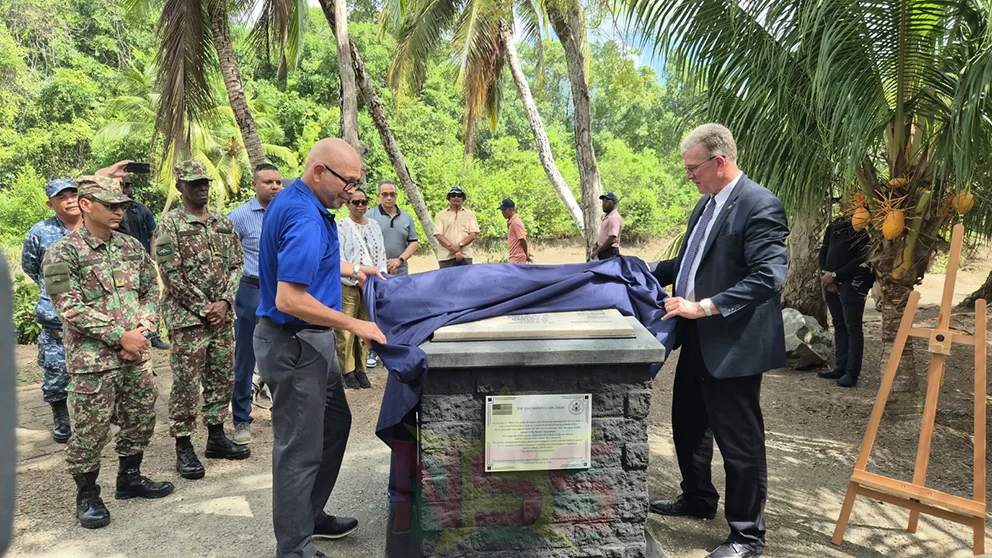
Suriname’s pivotal role in World War II came into focus Thursday as U.S. Ambassador Robert Faucher and Education Minister Dirk Currie unveiled a renovated memorial commemorating a mysterious 1943 plane crash that claimed 35 lives. The ceremony at Bakkie Museum marked both historical remembrance and Faucher’s final diplomatic act before concluding his service in Suriname.
On January 15, 1943, a Douglas C-54 Skymaster military aircraft plunged into the Warappakreek near Reynsdorp, known locally as Bakkie, in what remains Suriname’s deadliest aviation accident. All passengers perished, including high-ranking government officials, military personnel, and FBI agents. Witnesses reported seeing a ‘fireball’ descend, though the crash’s cause remains undetermined eight decades later.
Ambassador Faucher revealed the flight was part of a secret three-plane mission destined for the historic Casablanca Conference, where President Franklin Roosevelt and Prime Minister Winston Churchill would strategize the Allied victory. Each aircraft departed Washington at thirty-minute intervals, following a Caribbean and South American coastal route to Africa while evading enemy warships and submarines.
‘Suriname held vital strategic importance,’ Faucher emphasized, noting that 80% of U.S. aluminum for war materials originated from Surinamese bauxite. The nation’s airspace also served as a critical corridor to global conflict zones.
The ill-fated aircraft carried significant resources including gold, currency, and confidential documents. While Roosevelt ultimately traveled via modified arrangements, two planes reached Morocco successfully. The third crashed under circumstances that spawned theories ranging from onboard explosions to enemy attacks, as documented in Dave Edhart’s investigation ‘Mayday In The West’.
The ceremony included a moment of silence for victims, among them Eric Knight, author of ‘Lassie Come Home’. Although artifacts including the propeller and personal effects reside in Bakkie Museum, most wreckage remains buried in marshland. The memorial now stands renewed, bearing names of those whose silent mission contributed to Allied success.